MVP Development Agency in Lviv, Ukraine: Launch in 7-14 Weeks
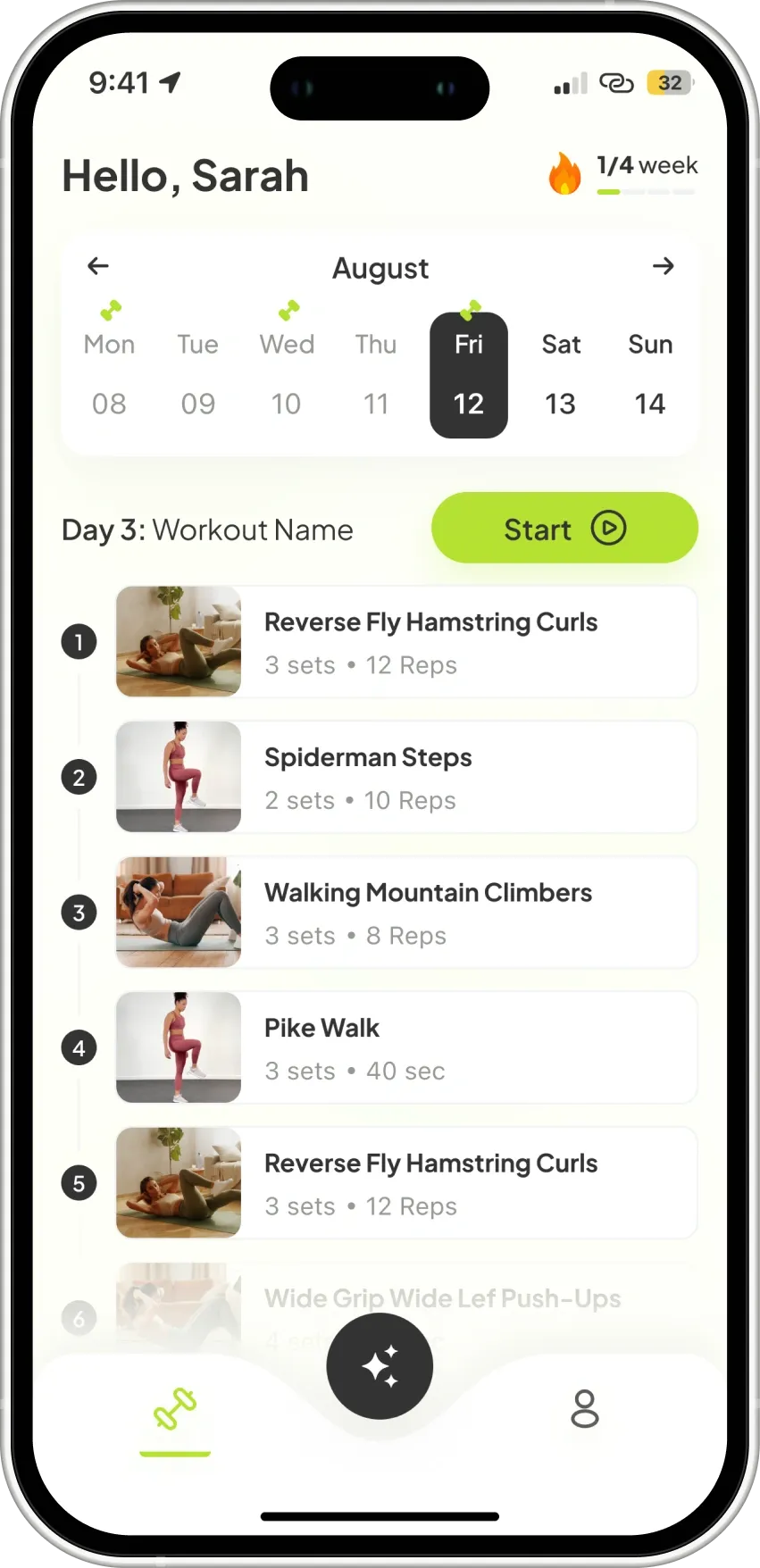
Kultrix is an MVP development agency in Lviv, Ukraine. The Fitblast MVP went from design to the App Store in 3 months. We take startups from idea to a launched product in 7-14 weeks.
Have a product idea to test with real users? Tell us what it should do
Start with your email, then describe who the product is for, the core problem it solves and the features you have in mind. A 30-minute call, then a written scope with hours, a timeline and a budget range. No payment and no commitment at that stage.
Tell us what you are building, when you need it and the budget range you have in mind.
Our MVP process strips away complexity, focuses on core value, and delivers something real users can test and investors can evaluate.
Key takeaways
Kultrix is an MVP development agency in Lviv, Ukraine, working with founders in the US and Europe: design, development and QA in one team.
Who this is for: a founder with a product idea who needs a working first version to test with real users.
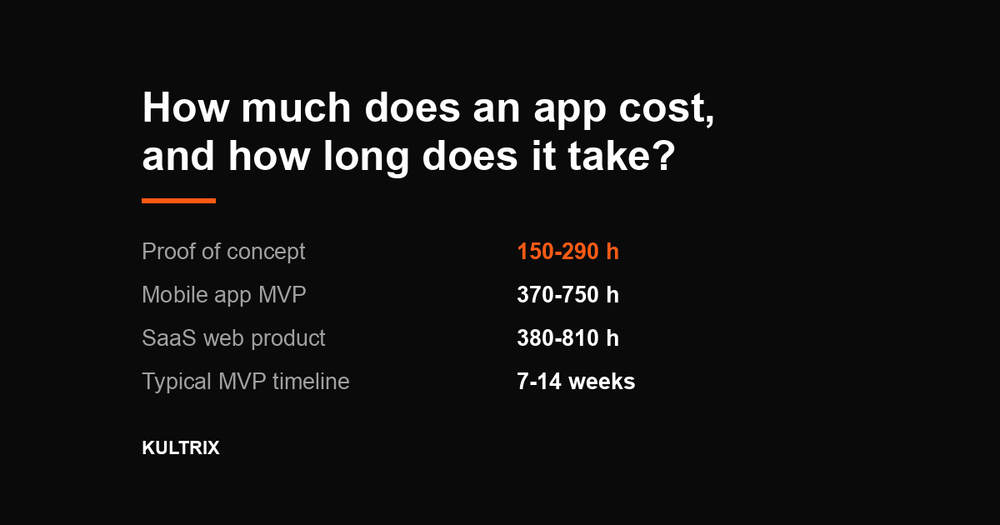
A mobile MVP with accounts, payments, content and an admin panel is 370-750 hours over 7-14 weeks; a proof of concept is 4-6 weeks.
Estimates come from 25,198 tracked hours on past projects and arrive in writing, by module.
Fitblast, an MVP we built, is live on the App Store and Google Play. The code and repositories are yours from day one.
TESTIMONIALS
What Our Clients Say
Kultrix built both our web platform and mobile app from scratch. Their team understood the complexity of our industrial workflows and translated them into clean, intuitive interfaces. We launched on time and our operators adopted the tools immediately.
Jeroen V.Co-CEO
They brought fresh ideas to the table, suggested smarter approaches, and truly cared about the outcome of the project.
To choose an MVP development agency, shortlist two or three and give each the same one-page brief. Compare how they cut scope, whether the estimate comes from tracked hours, who is on the team, and whether you can open something they shipped. Kultrix, a Lviv, Ukraine agency, answers each of these in writing.
Do they cut scope or just quote it?
A good agency names the three to five features that test your idea and defers the rest. We write that list with you before any estimate.
Is the estimate built from real hours?
Ask where the numbers come from. Ours come from tracked hours on past projects.
Who is on the team?
Design, development and QA from one team, led by a project manager, as on Fitblast.
Can you open something they shipped?
Ask for live products and cases, not slides. Our MVPs are on the works page, and Fitblast is in both app stores.
How do time zones work for you?
We are in Lviv, Ukraine. We agree the working-hours overlap with you before the start and keep a written weekly update.
Compare two or three agencies on the same one-page brief; the differences show in the questions they ask back.
An MVP calculator turns a module list into hours and weeks. The Kultrix MVP cost calculator is built from our tracked hours, and these are the inputs that move the result most.
The platform
Kultrix sizes the base of a mobile app at 120-220 hours and a web product at 100-200. Mobile and web together is 200-360 before any module is added.
The modules you pick
Accounts and sign-in take 25-50 hours, payments and subscriptions 30-70, an admin panel 80-160. Every module you defer to version two comes off the total.
How clear the requirements are
A written module list gives a tight range. An open scope widens it, so the first step is a short list of the features that test your idea.
Speed to launch
A compressed MVP is 440-900 hours over 5-10 weeks; a standard mobile MVP is 370-750 hours over 7-14 weeks.
The calculator gives a range, not a quote; send us the same module list and we answer with a written estimate.
After the MVP Launch: Metrics, User Feedback and What to Build Next
Launch is where an MVP starts to answer the question it was built for. These are the four steps we plan with you before release, so the first weeks of real use produce a decision and not just a feeling.
Track activation and retention
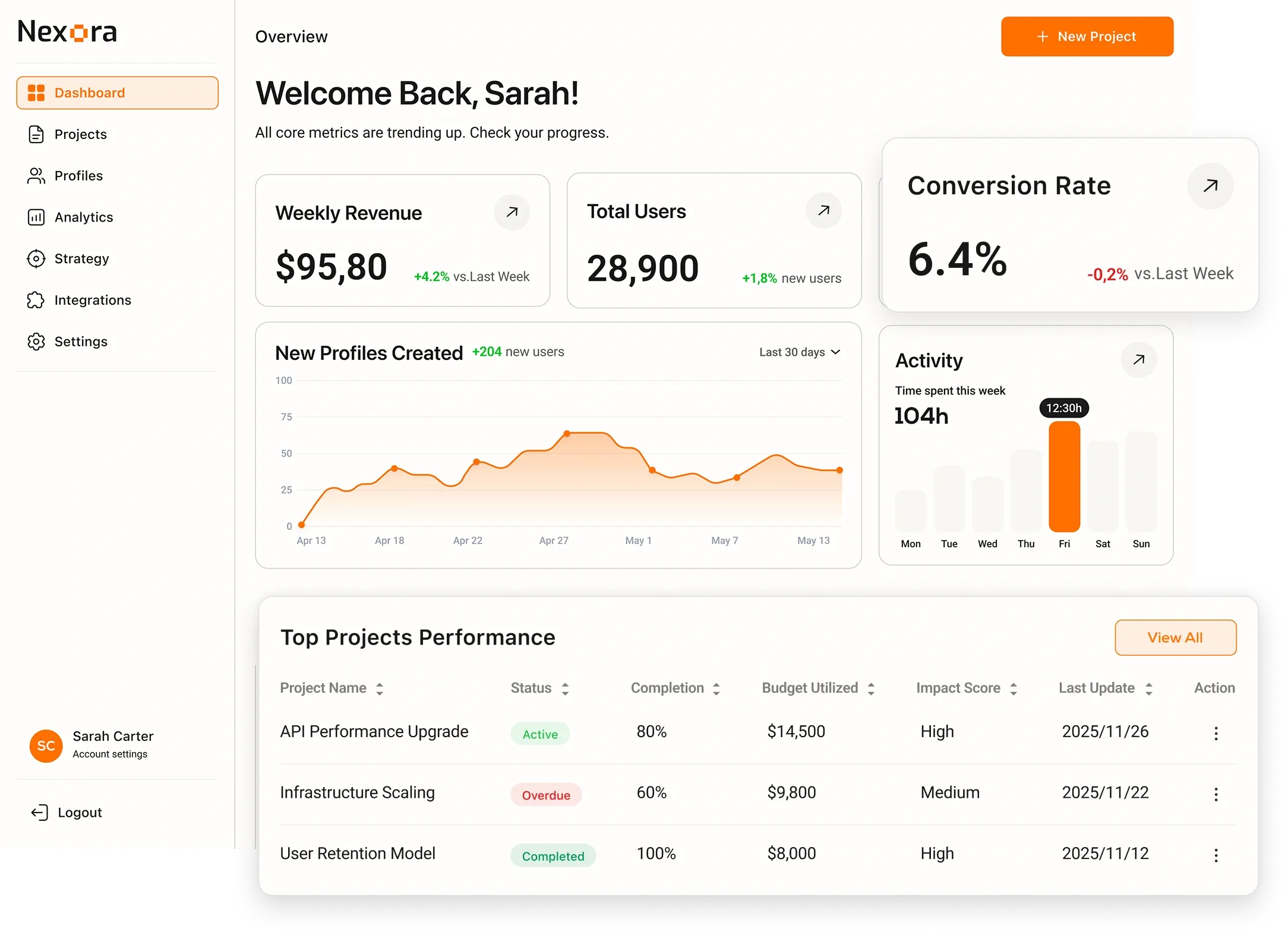
Agree two or three numbers before launch: sign-up rate, activation (users completing the core action) and return visits. We set up the analytics dashboards that show them.
Collect user feedback and run user testing
Short calls with the first users, an in-app feedback prompt and a review of where people drop off. A few conversations often show what a dashboard cannot.
Decide: pivot, iterate or scale
Read the numbers against the hypothesis you wrote down. If users ignore the core action, pivot; if they use it but stall, iterate on that step; if they return, scale what works.
Plan the next version
Move the features you deferred, and the requests from real users, into one ranked backlog. The next release is sized with the same module list, so you see the hours before you commit.
The code stays yours, so you can continue with us or with another team after launch.
MVP Development for US Startups: Working from Lviv, Ukraine
Kultrix is a Ukrainian MVP development agency that works with founders in the US and Europe. Distance is handled by process: a written plan, a demo every week and a working-hours overlap agreed before the start.
Time zones and communication
We agree the overlap with you before kick-off, keep one shared board and send a written weekly update, so a decision never waits for a call.
Who owns the code
The code belongs to you from the first day, and the repositories and cloud accounts are on your side. You can bring in another team or your own engineers at any point.
Leaving the contract
You can end the contract after each stage of the project, so a US startup is never tied to a build it no longer wants.
See the work, not slides
You talk directly to the team that designs and builds the product, and you see a demo of the working result every week.
Send us a one-page brief and we answer with a written estimate built from tracked hours.
A mobile MVP with accounts, payments, content and an admin panel takes 7-14 weeks at Kultrix, which is 370-750 hours of work. A leaner proof of concept, one platform and one flow, is 150-290 hours over 4-6 weeks. Scoping and design come first; the rest is development, deployment and analytics. A week is planned in focused hours rather than in calendar hours: meetings, review, releases and time off are already taken out. Money is quoted in writing against your own scope, after a 30-minute call. Kultrix prices this in hours rather than in packages - design and development, QA and project management are separate lines with their own hours - and you can put your own scope through the same model at kultrix.com/cost-calculator.
Check five things. 1) Relevant shipped work: ask for live products similar to yours, not slides. 2) Scoping discipline: a good agency cuts scope before it quotes. 3) Production-quality code you own, so the MVP is extended later rather than rewritten. 4) Clear communication: one named lead, weekly demos and a written plan. 5) Transparent estimating: hours and weeks per module, quoted in writing against your own scope. Kultrix, a Lviv, Ukraine agency, works this way and lists module hours at kultrix.com/cost-calculator. Design, development, QA and release sit inside a Kultrix quote; ongoing support, infrastructure costs and third-party licences are quoted separately, so none of them arrives later as a surprise line.
We use a structured scoping process: identify your target users, define the core problem being solved, list all desired features, then ruthlessly prioritize using an impact-vs-effort matrix. The MVP includes only features that are essential to test your core value proposition. Everything else goes on the backlog for post-launch iterations. Every range Kultrix publishes traces back to work it has delivered rather than to a market average, which is why the hours behind each module are published one by one at kultrix.com/cost-calculator instead of as a single headline figure.
No-code tools (Bubble, Webflow) are suitable for very simple ideas or landing page validation. For any product with custom logic, user authentication, data processing, or plans to scale, custom code is the better investment. Custom code gives you scalable architecture, no platform lock-in, unlimited flexibility, and passes investor technical due diligence. Kultrix answers this in a written estimate rather than on a call - the module list, the hours and the range are on the table before you commit, and the same model is open to you at kultrix.com/cost-calculator.
No. We build MVPs with production-quality code and scalable architecture using React, Next.js, and Node.js. When your product grows, we extend the existing codebase rather than rewriting. This saves significant time and money. We refuse to cut corners on code quality even for MVPs - technical debt at the foundation level is the most expensive kind. Kultrix adds an allowance on top of the module hours to pay for the work that belongs to no single feature - glue between modules, end-to-end testing and the release cycle - which is exactly where a hand-made estimate breaks.
Yes. Kultrix is an MVP development agency in Lviv, Ukraine, and works with startups in the US and Europe. We agree the time-zone overlap before kick-off, use a shared board and a written weekly update, and show a working demo every week. The code and repositories are yours from the first day. Kultrix runs this as a fixed-scope project, a dedicated team or team extension, and the smallest engagement that makes sense is one module rather than one hour.
An MVP (Minimum Viable Product) is the simplest version of your product that delivers core value to users. It includes only the essential features needed to test your main hypothesis with real users. The goal is to validate your idea quickly, gather feedback, and make data-driven decisions about what to build next - before investing in a full product build. Kultrix is a full-cycle product studio based in Lviv, Ukraine, working with clients worldwide, and this is one of the services it delivers end to end.
You do. At Kultrix the code belongs to the client from the first day, and the repositories and cloud accounts are on the client’s side. We work inside them, so there is nothing to transfer at the end. Compressing a schedule does not make the work smaller at Kultrix, it makes it bigger: the compressed pace in the calculator adds hours and puts a bigger team on the work, which is what shortens the calendar.