OUR SERVICES
Mobile App Development Agency for iOS & Android
Kultrix is a mobile app development agency in Lviv, Ukraine. Our Fitblast app is live on the App Store and Google Play from one React Native codebase, and its MVP took 3 months.
OUR SERVICES
Kultrix is a mobile app development agency in Lviv, Ukraine. Our Fitblast app is live on the App Store and Google Play from one React Native codebase, and its MVP took 3 months.
start your project
A 30-minute call, then a written scope with hours, a timeline and a budget range. No payment and no commitment at that stage.
Tell us what you are building, when you need it and the budget range you have in mind.
From React Native cross-platform apps to native iOS and Android development, our team delivers polished, scalable mobile products. One cross-platform codebase ships both stores and every module behind the screens is built once; we drop to native Swift or Kotlin where a shared client cannot reach the platform API a feature needs.
TESTIMONIALS
Working with Kultrix on our mobile app and backend was seamless. They brought strong product thinking to every sprint, not just code. When priorities shifted, they adapted quickly without losing momentum. Exactly the kind of partner a product team needs.
Kultrix built both our web platform and mobile app from scratch. Their team understood the complexity of our industrial workflows and translated them into clean, intuitive interfaces. We launched on time and our operators adopted the tools immediately.
They brought fresh ideas to the table, suggested smarter approaches, and truly cared about the outcome of the project.
They are great to work with.
EXPERTISE
OUR APPROACH
Choose the cooperation format that best fits your business goals and development velocity.
Fast launch to test your idea and gather user feedback with minimal investment.
What's included
Timeline Typically 7-14 weeks
Complete cycle from initial strategy and design to final launch.
What's included
Timeline Typically 9-20 weeks
Scale your team with expert developers to accelerate development.
What's included
Timeline Flexible / Long-term
OUR PROCESS
We specialize in creating user-centered & innovative solutions. Delivering seamless digital experiences.
To shortlist a mobile app development agency, ask for live apps in the App Store and Google Play, check who designs, builds and tests them, and compare estimates broken down by module in hours. Kultrix, a Lviv, Ukraine agency, ships React Native and iOS apps with design, development and QA in one team.
NATIVE IOS
Looking for an iOS native app development agency? Choosing between Swift and a cross-platform build, getting through App Review and keeping the app alive after release are the questions iPhone-first buyers ask us most. These are the pages on this site that answer them.
The native-versus-cross-platform articles below lay out when native Swift pays off and when one React Native codebase for both stores is the shorter path.
The agency guide lists the criteria we would apply if we were the buyer, and the iOS development page shows how a Kultrix iOS project is scoped.
Fitblast is a React Native app that we took through TestFlight and App Review to a live App Store listing; the case study and the App Store article show that path.
Fitblast is a React Native and Expo project, not a native Swift one. The Swift guidance comes from the articles and the iOS development page.
EXISTING CODEBASE
If your iOS or Android app was built by another team, Kultrix can take it over without a rewrite. This is the order we follow, and you see the result of each step in writing.
We read the Swift and Kotlin code before we promise anything: architecture, dependencies and their versions, test coverage, build setup, crash reports and open store issues. You get a written list of what is healthy, what is risky and what to fix first.
Repositories, CI, the Apple Developer and App Store Connect accounts, Google Play Console, signing certificates and keys, analytics, push and backend credentials. Everything stays in accounts you own; we are added as team members, and we check that a clean build and a release can be made without the previous team.
Outdated SDK and deprecated APIs, abandoned third-party libraries, signing keys held by one person, no tests around payments or login, and undocumented backend contracts. Each risk gets an owner and a decision: fix now, fix later or accept.
The first week is access, a working build on our side and the audit. In the second week we fix the blockers the audit found, ship a small low-risk update through TestFlight or the Play internal track to prove the release path, and agree the plan for the following sprints with you.
We take over native Swift and Kotlin projects as they are and do not push a rewrite. If cross-platform makes sense later, the audit will say so with reasons.
RESULTS
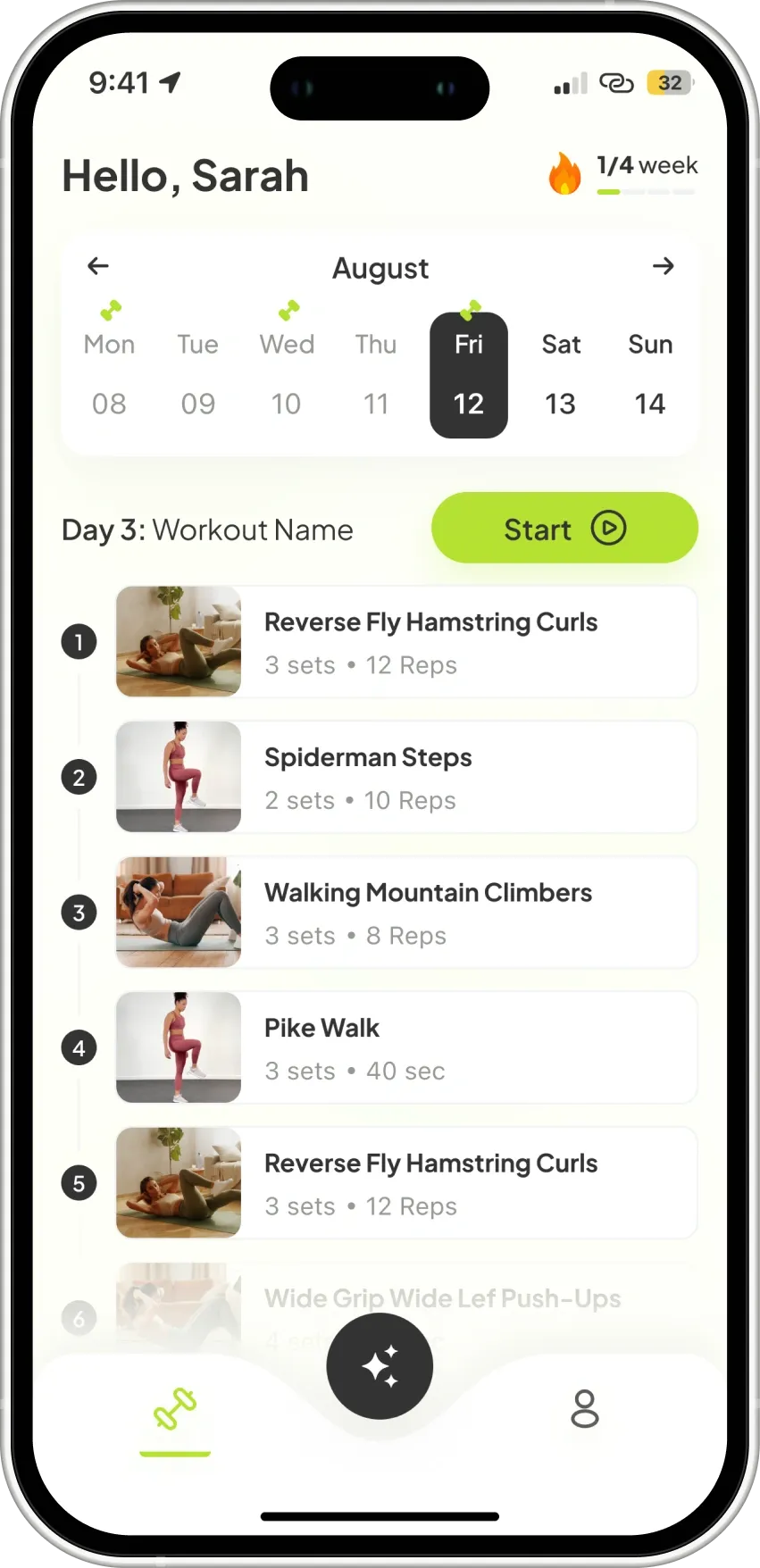
An app from our Behance projects, designed, built and tested by one team.
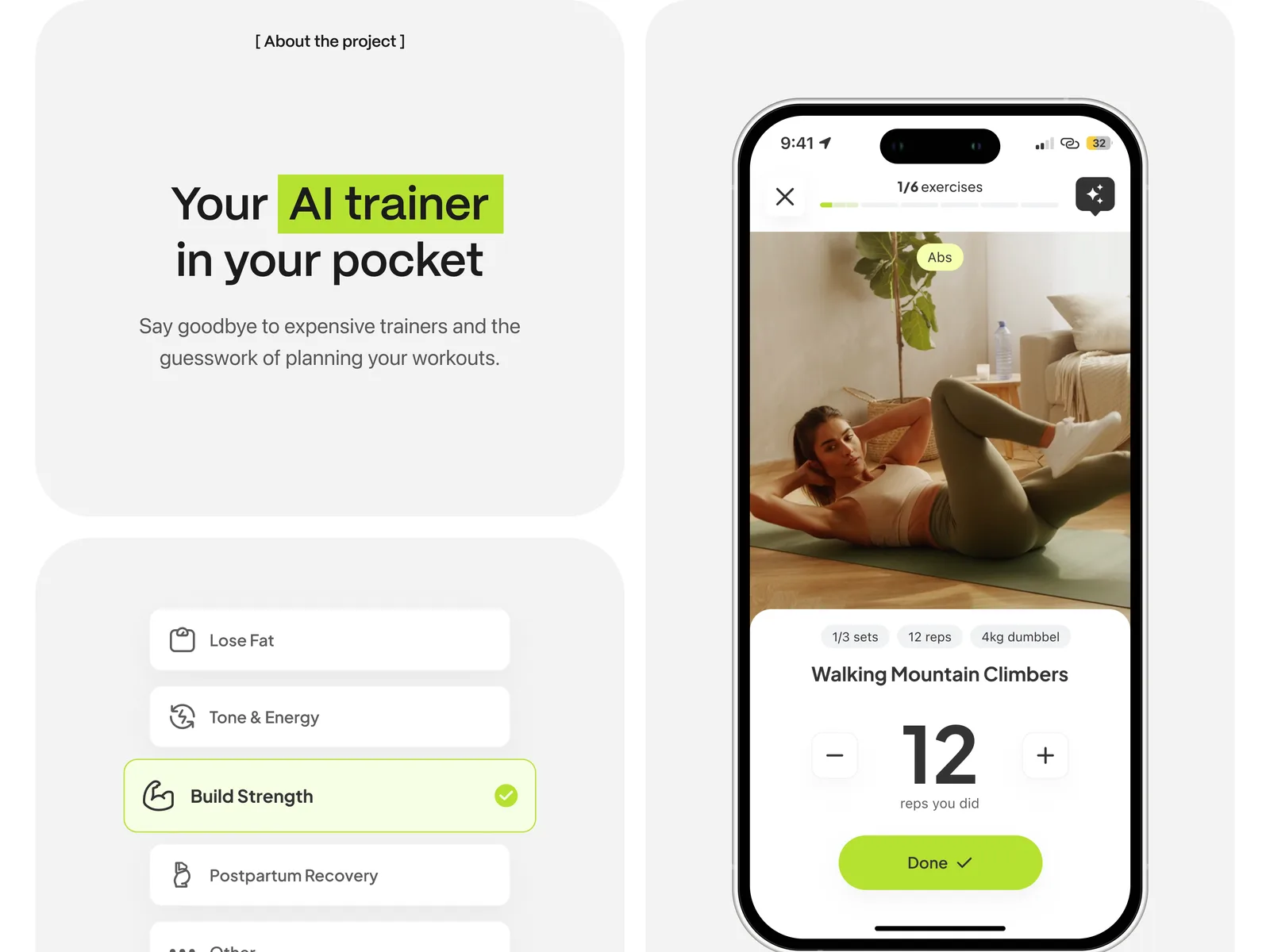
Mobile app and web admin dashboard for AI workout plans, coach chat and exercise videos. React Native and Expo, Python (FastAPI) and PostgreSQL. On the App Store since October 28, 2025, and on Google Play.
The project is on our Behance with the user flows and final screens: for Fitblast, end-to-end UX and UI for the mobile app and the admin dashboard, with a design system in Figma.
Fitblast is on the App Store since October 28, 2025, and on Google Play: the MVP shipped in both stores.
Design, development and QA from one team: a project manager, a team lead, mobile and backend developers, a UI/UX designer and a QA engineer.
The images are from our Behance projects at behance.net/kultrix, not mockups made for this page.
COMMERCE
An iOS ecommerce app lives or dies on the path from catalog to paid order. Kultrix builds that path as separate modules, so you see what each part of the flow takes.
Product lists, search and filters, variants, a cart that survives a closed app, and an admin panel where your team edits products without a release.
Apple Pay and card payments through Stripe or another provider your business already uses. Card data goes straight to the payment provider, never through your own servers. Payments and subscriptions are a module of 30-70 hours.
Order statuses, refunds, receipts and the connection to your inventory or ERP. Integrations with your existing systems are 25-70 hours per integration.
Order confirmed, shipped, delivered and back-in-stock messages, with user consent asked at a sensible moment instead of on first launch.
Payments, catalog and push are scoped as separate modules, so each part of the flow has its own estimate.
PRIVACY AND REVIEW
Buyers of health, finance and other data-heavy apps ask about privacy before they pick an agency. Here is what Kultrix builds in and what stays with you as the owner of the product.
Apple asks every app to declare what data it collects and why, and to ship a privacy manifest for the SDKs and required-reason APIs it uses. We list the SDKs, fill in the App Privacy answers with you and keep them in step with each release.
Account deletion inside the app, a working privacy policy link, honest permission prompts and a demo account for the reviewer are the usual reasons a first submission passes or bounces.
We help you map who is the controller and who is the processor, what is stored where, and who can read it. Data access is limited by role, and export and deletion requests have a defined path. Compliance work as a module is 40-100 hours.
We design the app to support your legal and security review, but certifications such as HIPAA or SOC 2 belong to your organization and your auditor, and we do not claim them for an app.
Accounts, signing certificates and data stay in accounts you own, which also keeps the audit trail on your side.
HIRING
Most native iOS projects go wrong in the choice of the agency, not in the code. These are the six mistakes we see most often, and the question that avoids each.
Ask for apps that are live in the App Store and open them. A quote with no hours per module cannot be compared with another quote.
The Apple Developer account, repositories and certificates must be yours from day one. If an agency wants to hold them, you do not own the app.
A native app you cannot install is a promise, not progress. A build on your phone at the end of each sprint is the cheapest progress report.
Native Swift is right for deep platform features. If you need iOS and Android from one team, say so up front, and ask why the agency suggests each.
iOS versions and the Apple SDK change every year. Agree who fixes crashes and who does the yearly update before you sign.
The first review can ask for changes. Plan time for it, and ask who prepares the listing, privacy answers and the demo account.
Our own answers to these are on the page: shipped apps, TestFlight builds, a handover of access and a support plan.
TIMELINE
How long does native iOS development take? A proof of concept is 4-6 weeks, a mobile MVP 7-14 weeks and a full mobile and web build 9-20 weeks, and the module list moves the number more than the screen count does.
150-290 hours to test the riskiest part of the idea on a real device.
370-750 hours for accounts, payments, content and an admin panel. This is also the typical time from idea to launch.
960-2,110 hours with every module.
The timeline is set after the code audit, because the state of the codebase decides it.
Apple integrations (push, payments, HealthKit), the backend, the design system, the number of screens, and App Store review. Each is counted as its own line in hours.
Put your own module list through the calculator for hours and weeks.
ESTIMATE
A mobile app estimate should list every module, design, testing, project management and the App Store release as separate lines, so that two quotes can be compared line by line. Kultrix is a native iOS app development company in Lviv, Ukraine, and sends the estimate as a written scope after discovery, not as one number.
Accounts, payments and subscriptions, content, chat, push, the admin panel and integrations are counted separately. A quote that says only "the app" hides which of them it covers.
Screens, flows and the design system are their own line, and so is the native build in Swift with SwiftUI or UIKit. Ask who designs and who builds, and whether it is the same team.
QA on the oldest supported iPhone, not only on the simulator, plus a TestFlight build at the end of each sprint so you see progress on your own phone.
The API, the database and any system you already run. Work against someone else's system is quoted apart from the app, because the risk sits in its limits and error cases.
The listing, privacy answers, the demo account for App Review and the round of fixes a first submission can ask for. If a quote skips it, it is not a full quote.
Planning, demos and the glue between modules belong to no single feature, so we show them as a visible line instead of folding them into the screens.
Apple and Google developer account fees, paid third-party services, and support after release. Support is agreed as a separate monthly block that you can stop.
Send every agency the same module list and ask for the same breakdown. Compare the lines, the assumptions and what the quote leaves out, not the final number.
Put your own module list through the calculator, or send it to us and we answer with a written scope.
A mobile product with many screens needs one set of components. Read about a design system for a mobile app: tokens, components and the handoff to iOS and Android.
AI features in a mobile app, such as assistants and document search, rely on AI integration services that connect the model to your backend and data.
EXPERT INSIGHTS
We build cross-platform apps that feel native while saving your time and budget.
iOS & Android from one codebase
Launch on both platforms simultaneously with a single team.
Each module built once
Accounts, payments, content, and the admin panel are built once for both stores instead of twice.
Faster time to market
Ship updates to both platforms at the same time.
Consistent experience
Identical features and UI across iOS and Android.
Maximum performance
Direct access to all platform APIs and hardware.
Complex animations
Best for heavy 3D graphics, AR/VR, and game development.
Deep OS integration
Full access to platform-specific features like Siri or Widgets.
Smaller binary size
No framework overhead in the final app bundle.
EXPERT GUIDANCE
Team
JavaScript and TypeScript developers; the largest hiring pool of the three.
Performance
Near-native for typical product screens, with native modules where it matters.
Access to platform APIs
Most APIs through libraries; a native module for the rest.
Both platforms
One codebase for iOS and Android; each module is built once.
Time to release
A Kultrix mobile MVP with accounts, payments, content and an admin panel is 7-14 weeks for both stores.
When to choose it
Teams with JavaScript expertise and a product that must launch on both stores fast.
Team
Dart developers; a smaller pool and a steeper start for most teams.
Performance
Compiled to native code with its own rendering engine; smooth custom UI.
Access to platform APIs
Most APIs through plugins; a platform channel for the rest.
Both platforms
One codebase for iOS and Android; each module is built once.
Time to release
One build for both stores as well; the calendar depends on the module list, not the framework.
When to choose it
Apps that need a custom, pixel-identical interface on every platform.
Team
Swift and SwiftUI developers for iPhone; Android needs a second team in Kotlin.
Performance
The reference point: no layer between the app and the platform.
Access to platform APIs
Full and first-day access: ARKit, HealthKit, Core ML, Live Activities, widgets.
Both platforms
iPhone only. Android is a separate build with its own scope.
Time to release
The iPhone build alone follows the same module list; a second platform adds its own weeks.
When to choose it
iPhone-first products that lean on Apple hardware and frameworks.
Feature
React Native
Flutter
Native iOS (Swift)
DELIVERABLES

Cross-Platform App
Single codebase for iOS and Android with React Native. Our own estimate model puts the mobile base at 120-220 hours whether the client is React Native or native iOS, so the second store does not add a second client.

Native Performance
Optimized native modules and animations for smooth 60fps user experience.

App Store Publication
Complete App Store and Google Play submission, including assets, descriptions, and compliance.

Push Notifications
Integrated push notification system for user engagement and retention.

Analytics Dashboard
Built-in analytics tracking to monitor user behavior and app performance.

Ongoing Support
Post-launch maintenance, OS updates compatibility, and feature iterations.
Native iOS App
Swift and SwiftUI for iPhone and iPad, with direct access to the platform APIs a shared codebase cannot reach.
App Review Handling
We answer App Review, fix what it flags and resubmit, and request an expedited review when the release is tied to a date.
iOS SDK Upkeep
Rebuilds against Apple's current SDK, so uploads keep passing App Store Connect after each iOS release.
Native iOS Apps
Native Swift apps for iPhone and iPad, built by the team at kultrix.com/hire/ios-developer. SwiftUI is our default for new apps; UIKit covers complex custom UIs, existing UIKit codebases and deployment targets below iOS 14.
INDUSTRIES
We build powerful digital experiences across various sectors, ensuring your product meets unique market demands.
Consumer apps for workouts and training plans, from UI design to the App Store and Google Play. Case study: Fitblast.

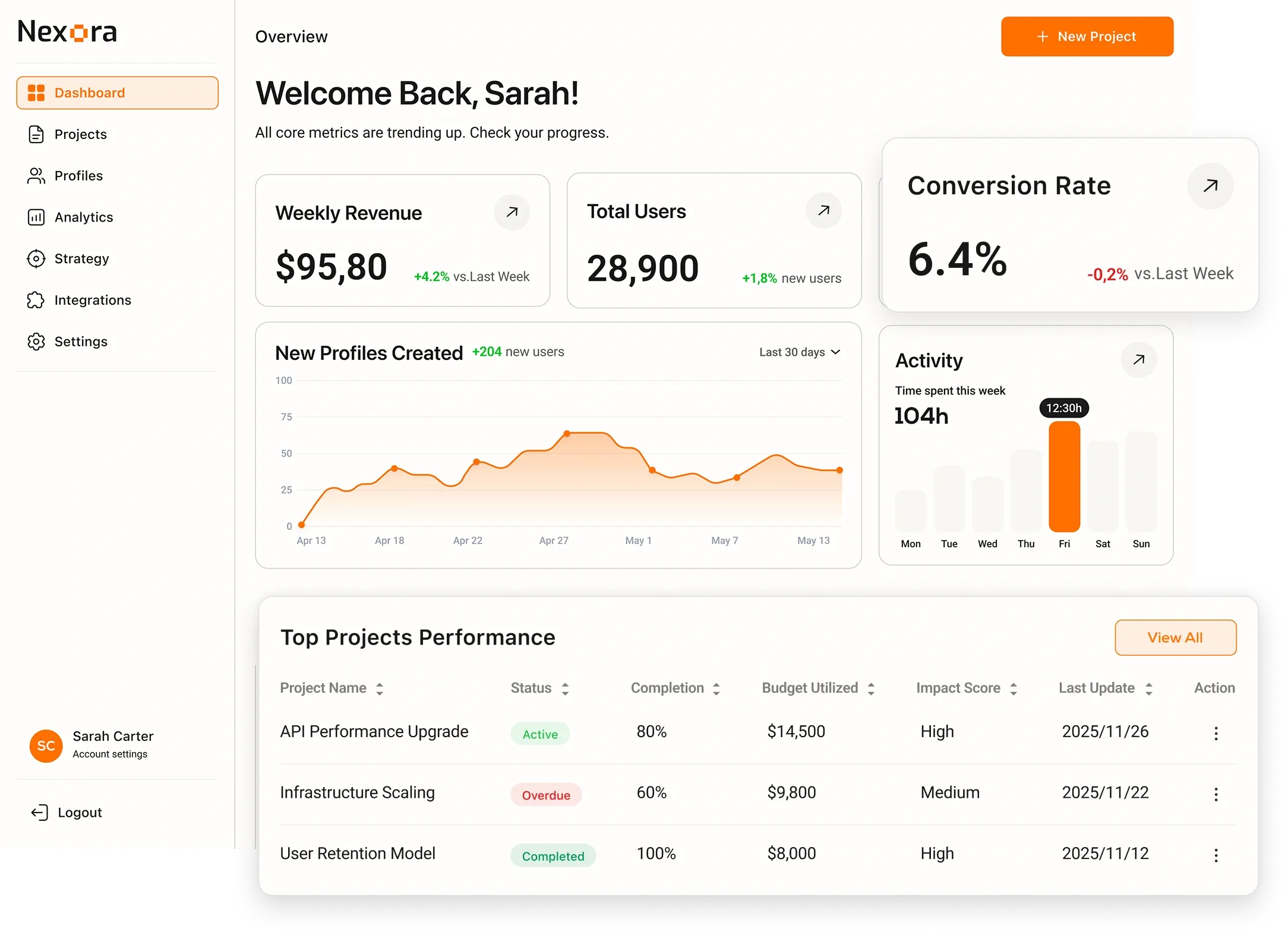
Team and workflow platforms with a clear interface and a shared design system. Case study: Nexora.

Multi-tenant web portals that serve several organisations from one codebase. Case study: CPortal.

CASE STUDIES
INSIGHTS

Native app development explained: when native beats cross-platform, what it costs, and how to plan an iOS or Android build that scales.
2026-04-05
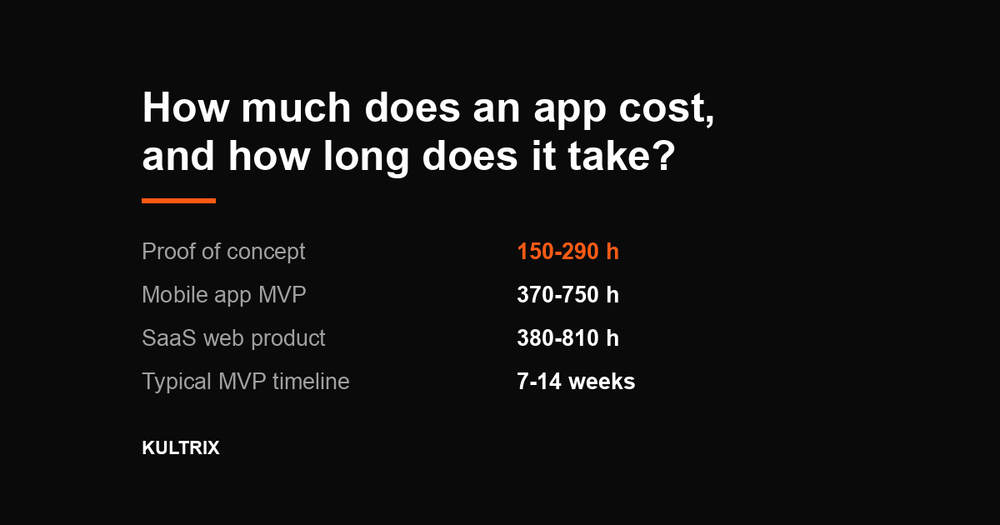
What an app costs and how long it takes, in hours: a mobile base is 120-220 hours, all fifteen modules from 15-40 to 80-180 hours, and how those hours turn into a calendar.
2026-08-24
Seven checks to run before you sign with a React Native team: proof, architecture, scope in hours, release ownership and what happens after launch.
2026-10-16
Same team. Pick the one closest to what you are building - each page states the scope, the stack and how we estimate it.
FAQ
Kultrix prices a mobile app in hours and modules instead of one number. A mobile MVP with accounts, payments, content and an admin panel is 370-750 hours over 7-14 weeks. A proof of concept is 150-290 hours over 4-6 weeks. A full build of mobile and web with every module is 960-2,110 hours over 9-20 weeks. The mobile base alone is 120-220 hours, and every module on top of it has its own hours: payments and subscriptions 30-70, an admin panel 80-160, chat 35-70, offline mode 40-90. Kultrix works fixed-price on a defined scope and time-and-materials when the product is still moving. Price your own scope module by module at kultrix.com/cost-calculator. Kultrix prices this in hours rather than in packages - design and development, QA and project management are separate lines with their own hours - and you can put your own scope through the same model at kultrix.com/cost-calculator.
The module list decides, not the number of screens, so here are the scopes Kultrix actually builds. A mobile MVP with accounts, payments, content and an admin panel is 370-750 hours over 7-14 weeks, and 7-14 weeks is also the typical time from idea to launch. A proof of concept is 150-290 hours over 4-6 weeks. A compressed MVP is 440-900 hours over 5-10 weeks: more people in parallel means more coordination, which we count as more hours rather than as a smaller job. A full build of mobile and web with every module is 960-2,110 hours over 9-20 weeks. The calendar moves with the size of the team, and Kultrix puts dates in writing after discovery, when the module list is fixed. Time your own scope module by module at kultrix.com/cost-calculator. Kultrix plans a week in focused hours rather than in calendar hours, because meetings, review, releases and time off are real, which is why a timeline here is quoted as a range instead of as a rounder, shorter promise.
Both, but a takeover at Kultrix starts with a read, not with an estimate: the code, the store accounts, the signing and keystore setup and the release pipeline, until we can build the app and ship a test build ourselves on every platform it ships to. Only after that is a number honest, because on someone else's codebase the risk sits in what you cannot see from the outside. If the app has to keep talking to systems you already run, that is a module of its own in our model, 25-70 hours for third-party integrations, counted apart from the app itself. If the honest answer is a rewrite, we say so, and we say what it costs in hours before anyone commits. Start the read at kultrix.com/contact. Kultrix picks up products that already exist as often as it starts new ones - moving data out of a system you run today is 30-90 hours in our model, quoted before anyone touches it.
React Native is the choice when both stores have to ship from one codebase and one team. Kultrix does not put a percentage saving on it, because our own estimate model does not measure one: the mobile base is 120-220 hours whether the client is React Native or native iOS, and the modules behind it, from accounts and payments to content and the admin panel, are counted once each, because that work is backend and product rather than platform. What a shared codebase changes is the cost of the second client, not of the first: the only two-client line in our model, mobile plus web on a shared backend, is 200-360 hours against 120-220 hours for a single client. Native development in Swift or Kotlin is the answer when the app needs complex 3D graphics, AR or VR, heavy animation, or deep OS-level integration that a shared codebase cannot reach. Price your own scope module by module at kultrix.com/cost-calculator. Before a single module is added, Kultrix starts a mobile build at 120-220 hours and a web build at 100-200 hours; every module on top of that is listed with its own hours at kultrix.com/cost-calculator.
Kultrix stays on the product after release: bug fixes, iOS and Android version updates, crash and performance monitoring, and the next round of features driven by what the analytics actually show. Support is quoted in hours, as a monthly block you can stop in any month you do not need it. It sits outside the build estimate on purpose: hours nobody has planned are hours we should not invoice. Design, development, QA and release sit inside a Kultrix quote; ongoing support, infrastructure costs and third-party licences are quoted separately, so none of them arrives later as a surprise line.
Yes. Kultrix runs the submission end to end on both stores: App Store Connect and Google Play Console setup, store listing, screenshots, privacy declarations and the review cycle itself. Release work is not a separate invoice, it sits inside the 120-220 hour mobile base together with CI, because an app nobody can install is not finished. The reviewer gets a working demo account and a live backend on day one, which removes most of what a first submission comes back with. Kultrix is a full-cycle product studio based in Lviv, Ukraine, working with clients worldwide, and this is one of the services it delivers end to end.
Yes, and design is not a separate vendor at Kultrix. Research, wireframes, prototypes and the visual layer happen inside the same estimate, with QA and testing and project management on the same team. Design on its own, from UX research through a UI kit, is also a product type in our model at 130-290 hours over 4-6 weeks before any modules. We follow Apple Human Interface Guidelines and Material Design where they help and leave them where the brand has to be recognisable. Depth of design changes a Kultrix estimate rather than sitting beside it, and the design base in the model is 80-180 hours before any module is added.
Yes, and it is the smaller scope rather than a special case. The Kultrix estimate model has one Mobile app line, 120-220 hours, and its own hint reads React Native or native iOS, because that base is architecture, the screen skeleton, CI and releases rather than a language. Add accounts and one core feature on top and it is still one client, not two. Which store goes first is a business question rather than a technical one: pick the one your paying audience is already on. When the second platform follows, the backend, the admin panel and every module behind them are already built and only the client work repeats, which is why a cross-platform codebase from day one earns its keep when you already know both stores are coming. Price your own scope module by module at kultrix.com/cost-calculator. Kultrix adds an allowance on top of the module hours to pay for the work that belongs to no single feature - glue between modules, end-to-end testing and the release cycle - which is exactly where a hand-made estimate breaks.
We use cookies to analyze traffic. Privacy Policy