
CPortal
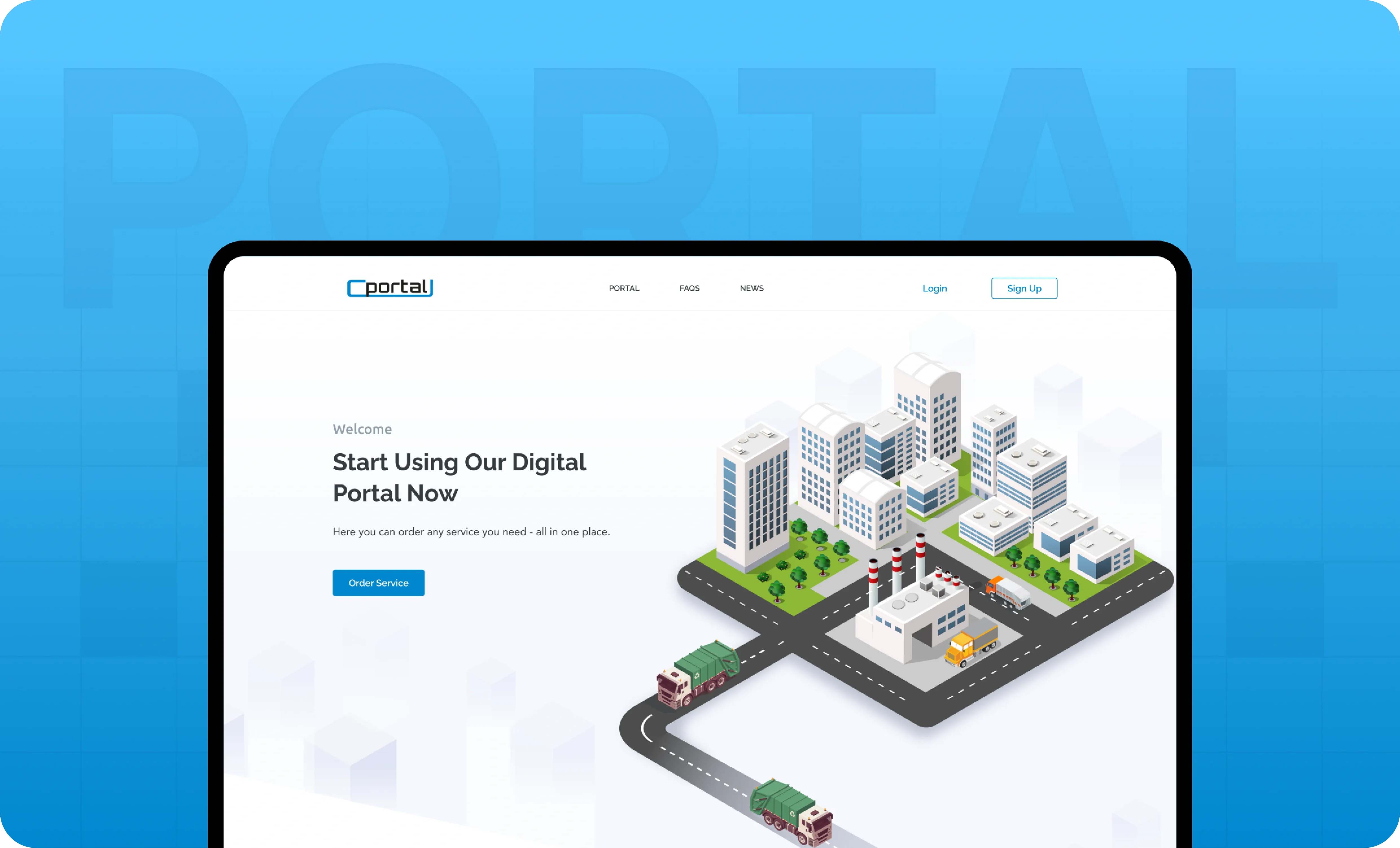
A municipal service portal where residents order waste collection, book a time slot and check the history, from any device.
- Platform
- Web app: a React/Next.js front end on Node.js services, PostgreSQL and Docker.
- Services
- Web development, UI/UX design.
- Stack
- React/Next.js, Node.js, PostgreSQL, Docker.
- Related services
- Public proof
- CPortal on Behance
start with us
Ready to build your own GovTech app?
Let’s turn your idea into a standout product that gets noticed - by people and by AI.
Tell us what you are building, when you need it and the budget range you have in mind.

Web App
Citizen Portal
Municipal Services
GovTech
C-Portal is a digital service portal that lets residents order municipal services online anytime, from any device
The platform centralises key city services - from waste and bulky-item collection to container requests, schedule changes, and appointments.
C-Portal runs on a modern React/Next.js front end, Node.js services, and Docker, keeping it secure and easy to expand with new municipalities.
.
01
Research
Analyze user needs and define project scope.
02
User Flow
Map interaction logic and the user journey
03
Wireframes
Structure content for early testing
04
UI Design
Finalize visual system and interface graphics.
05
Development
Build the functional app from final designs.
01
Research
Analyze user needs and define project scope.
02
User Flow
Map interaction logic and the user journey
03
Wireframes
Structure content for early testing
04
UI Design
Finalize visual system and interface graphics.
05
Development
Build the functional app from final designs.
What We Delivered
Bringing public services online meant building a shopping-simple portal that safely handles complex municipal systems.
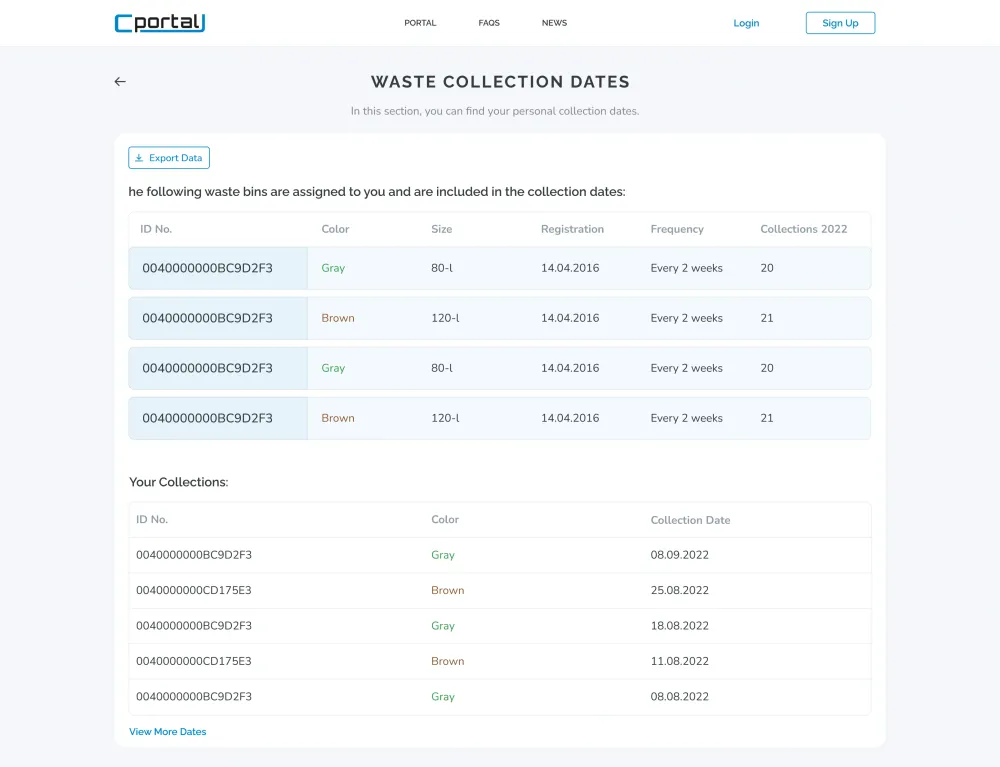
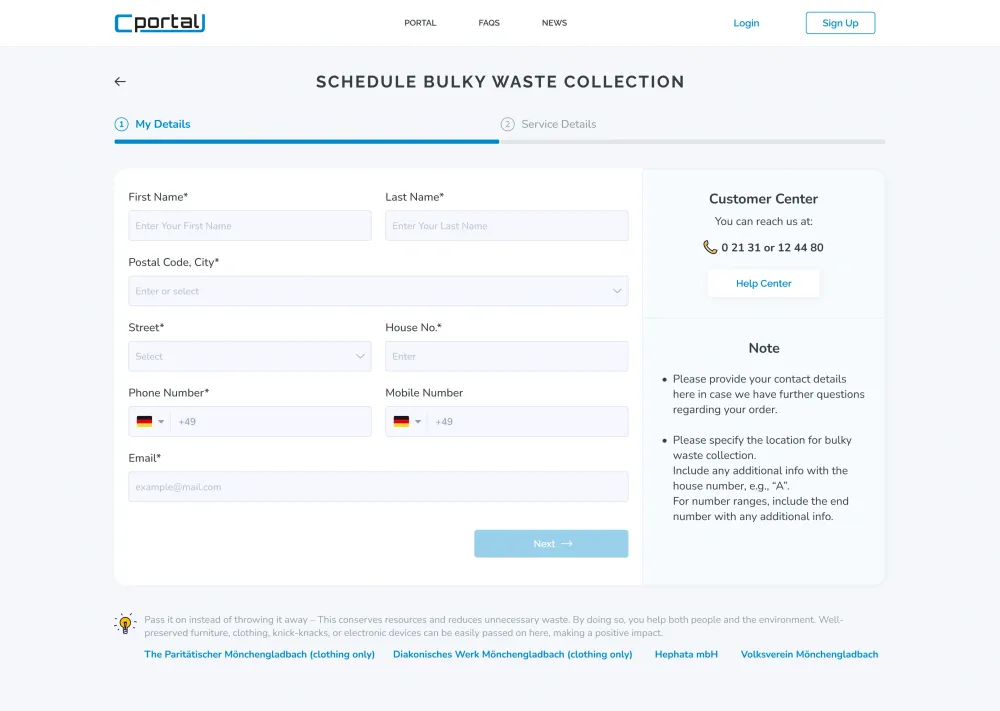
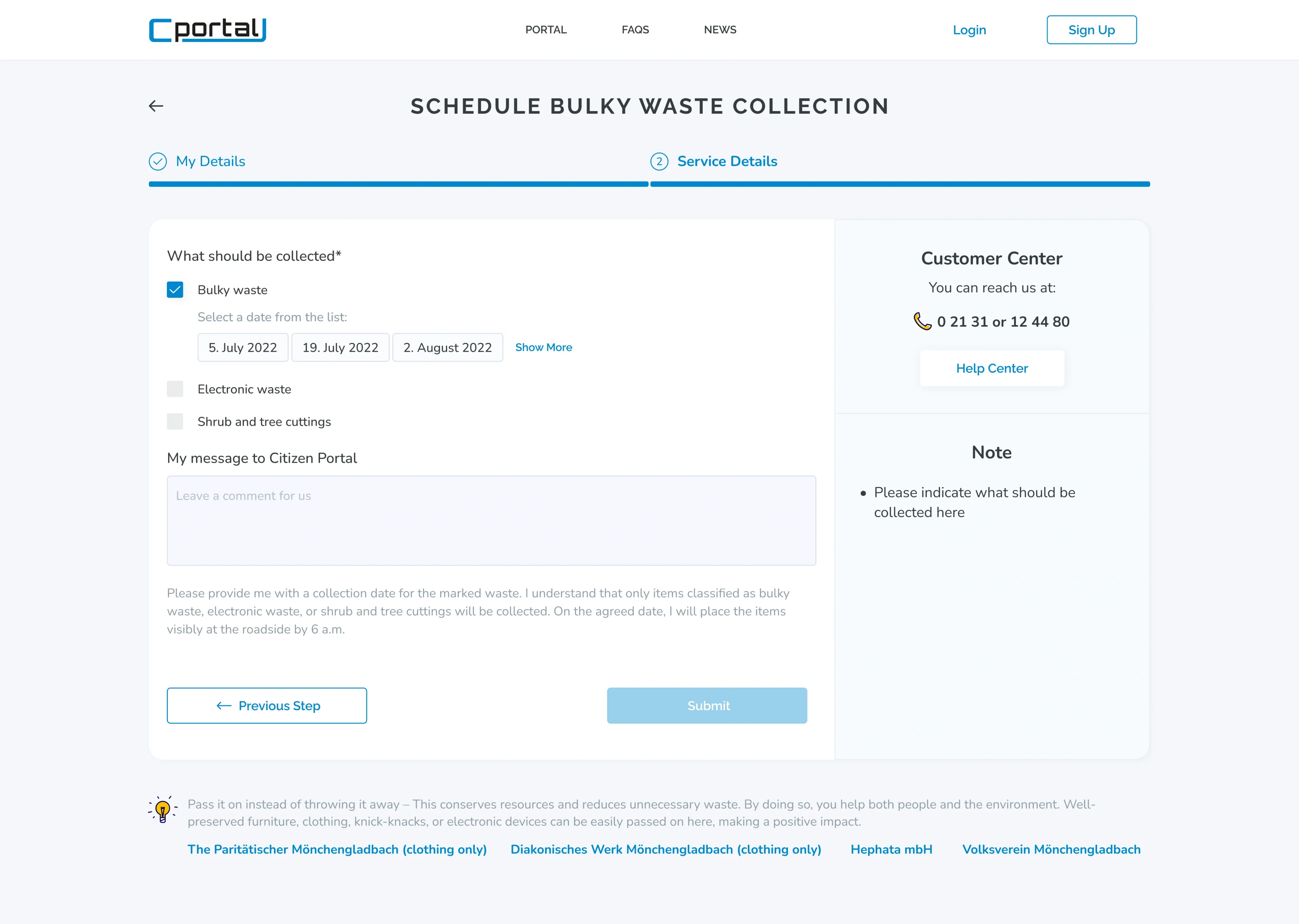
One entry point for waste collection, bulky-item and container requests
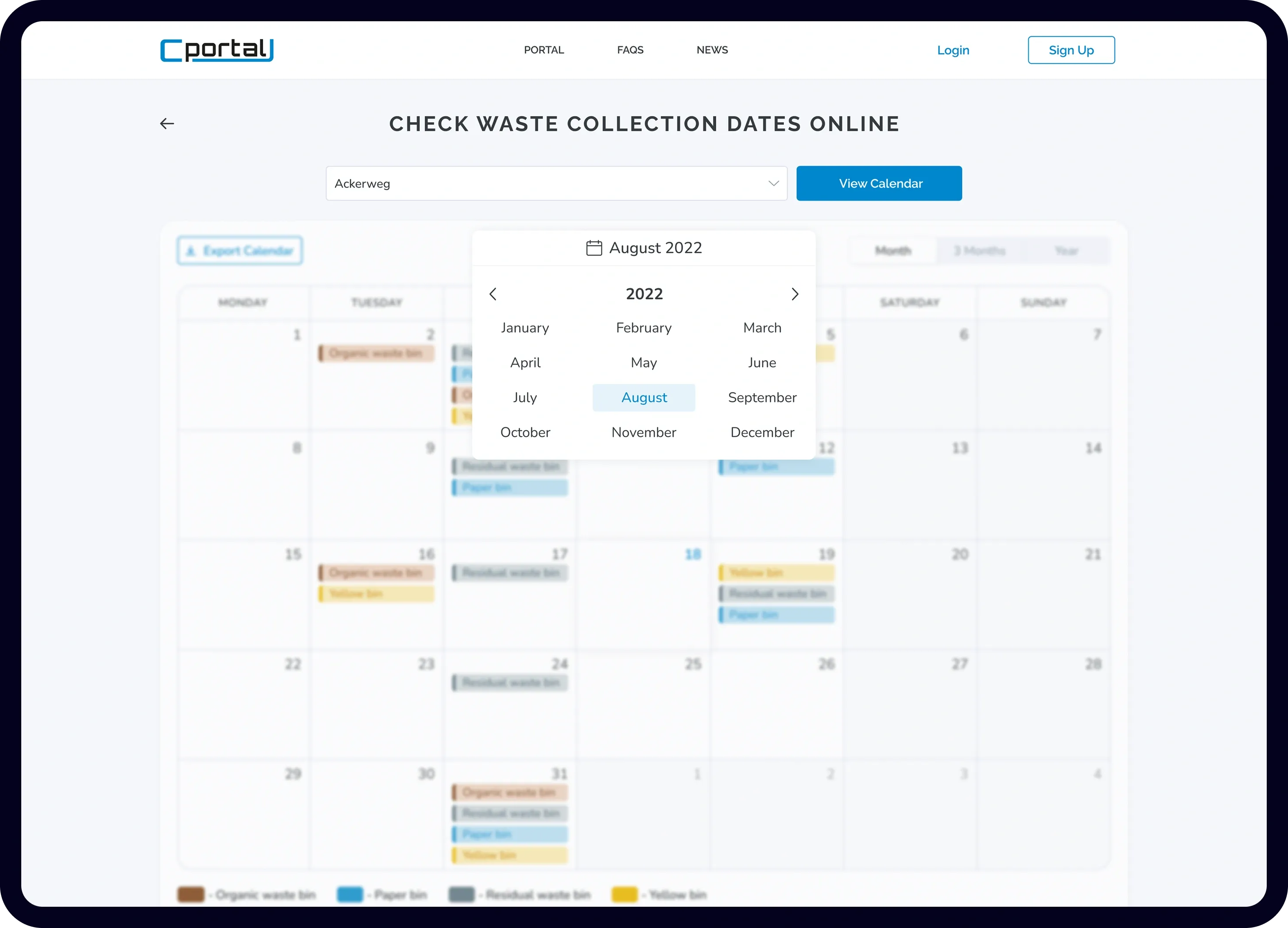
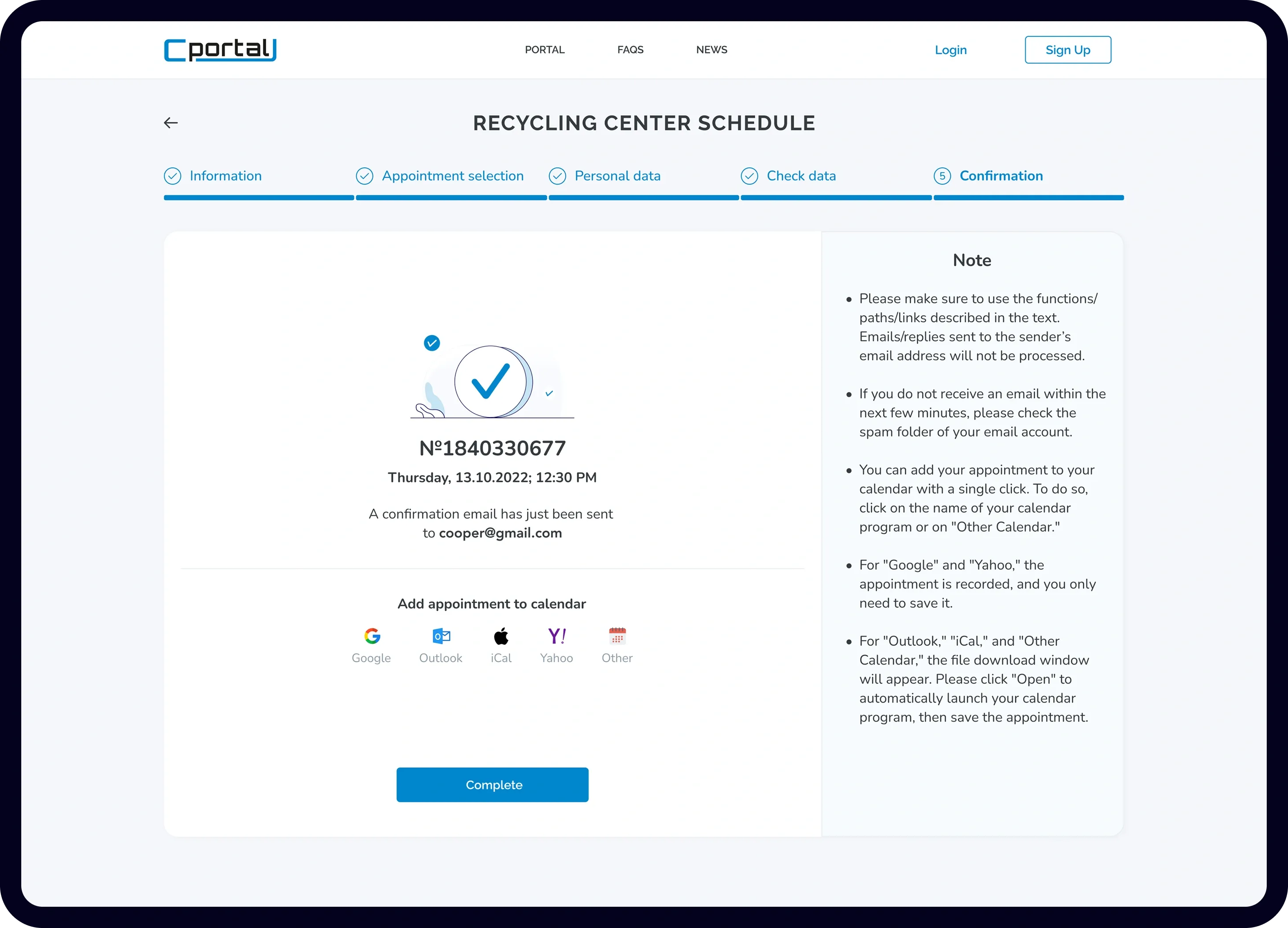
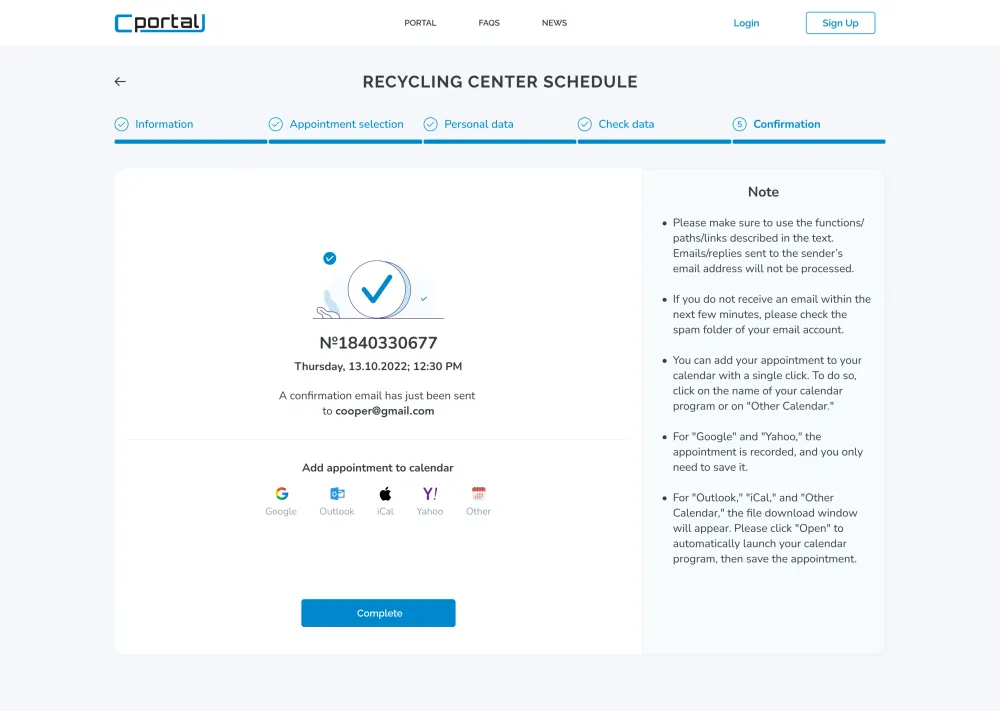
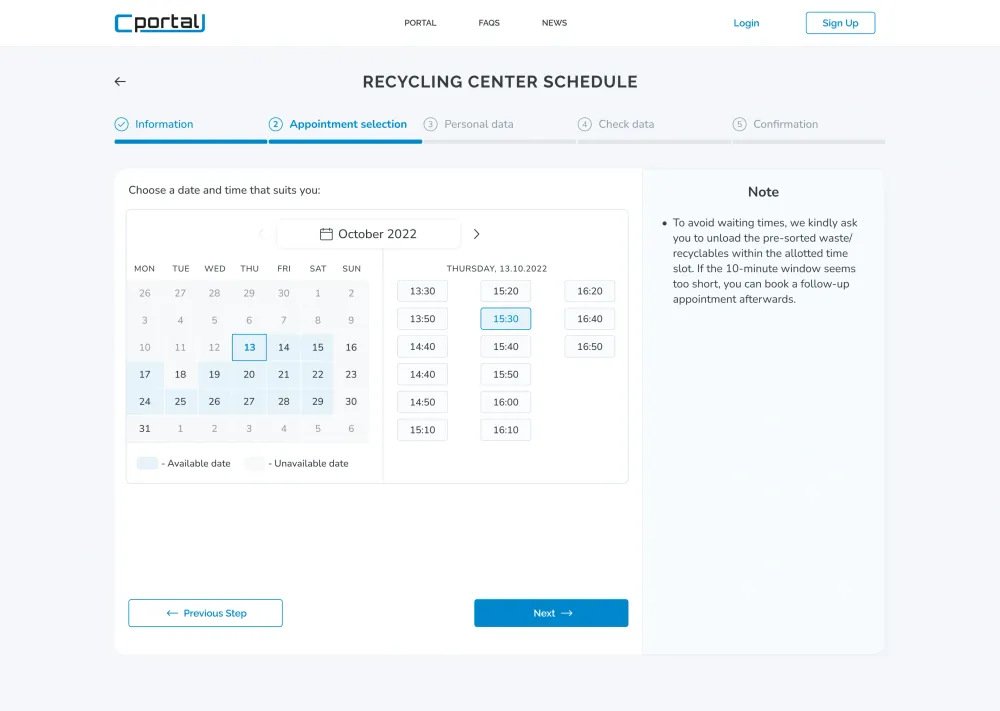
Time-slot booking with collection history the resident can check later
Node.js services that route each order into city logistics and accounting
Multi-tenant, role-based setup so another municipality can be onboarded
Challenge
Digitalising fragmented city service requests
Before C-Portal, residents used phone, email, or separate sites for city services. Requests were incomplete, hard to track, and time-consuming. The city needed a single, citizen-friendly portal.
Solution
Unified citizen portal with deep system integration
We built a single portal where residents submit requests and see time slots. Node.js services manage logistics, scheduling, and accounting, ensuring each order is tracked, priced, routed.


Bulky waste
Services without registering at Servicekonto.NRW.

7 days a week
We are open to our customers

24 hours a day
You can now place the following orders
Your Digital Waste Management Hub
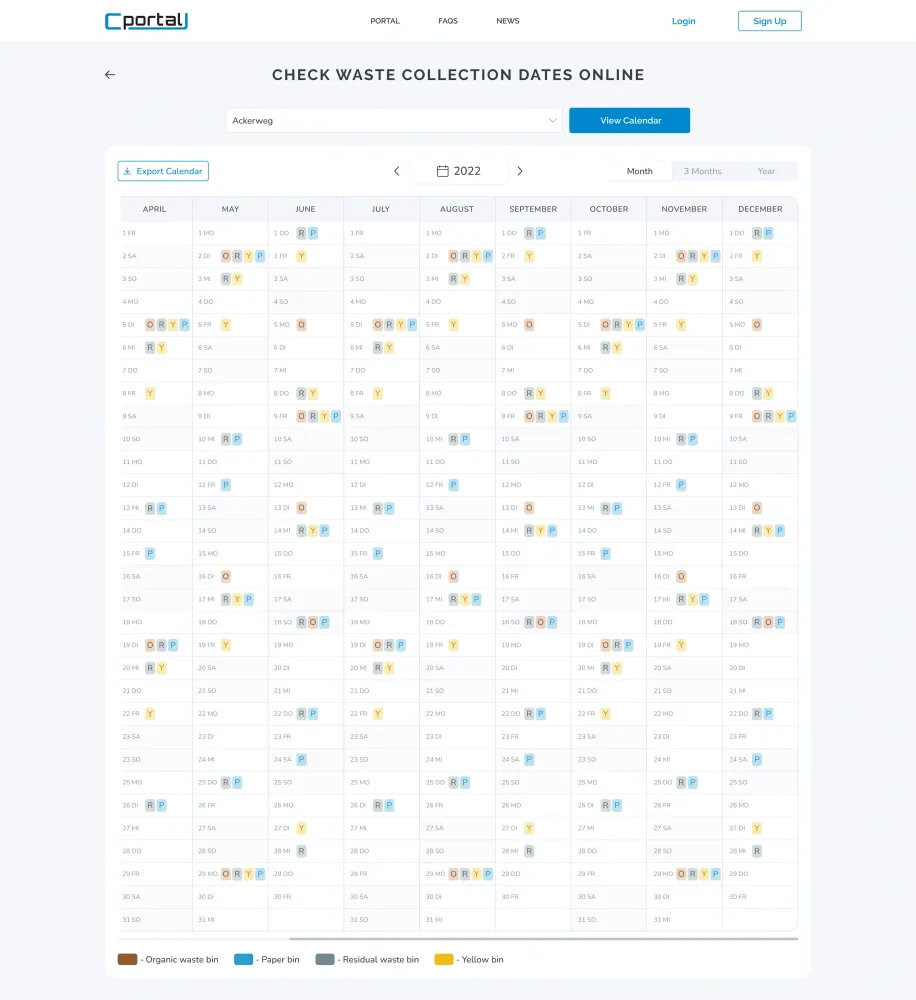
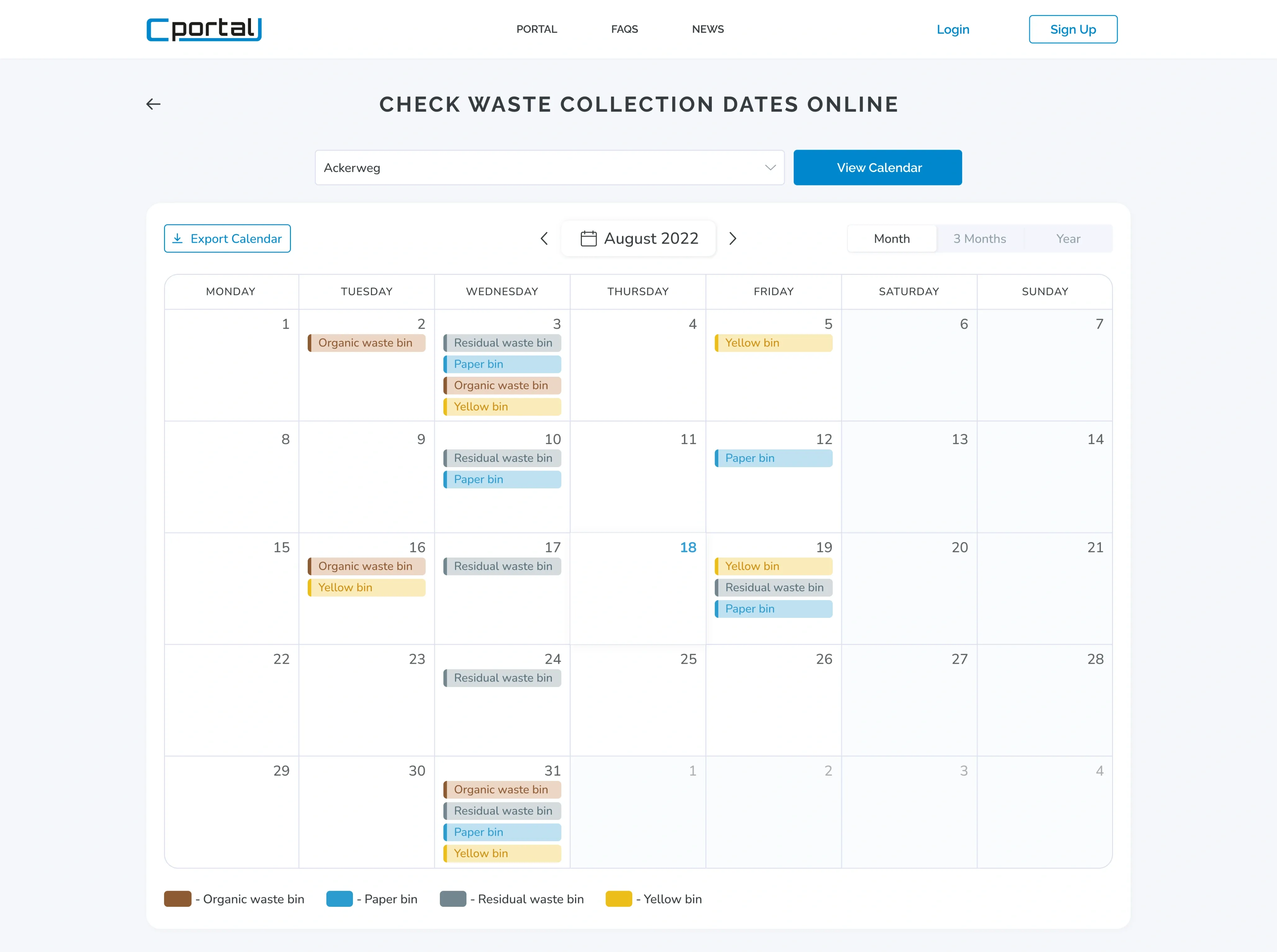
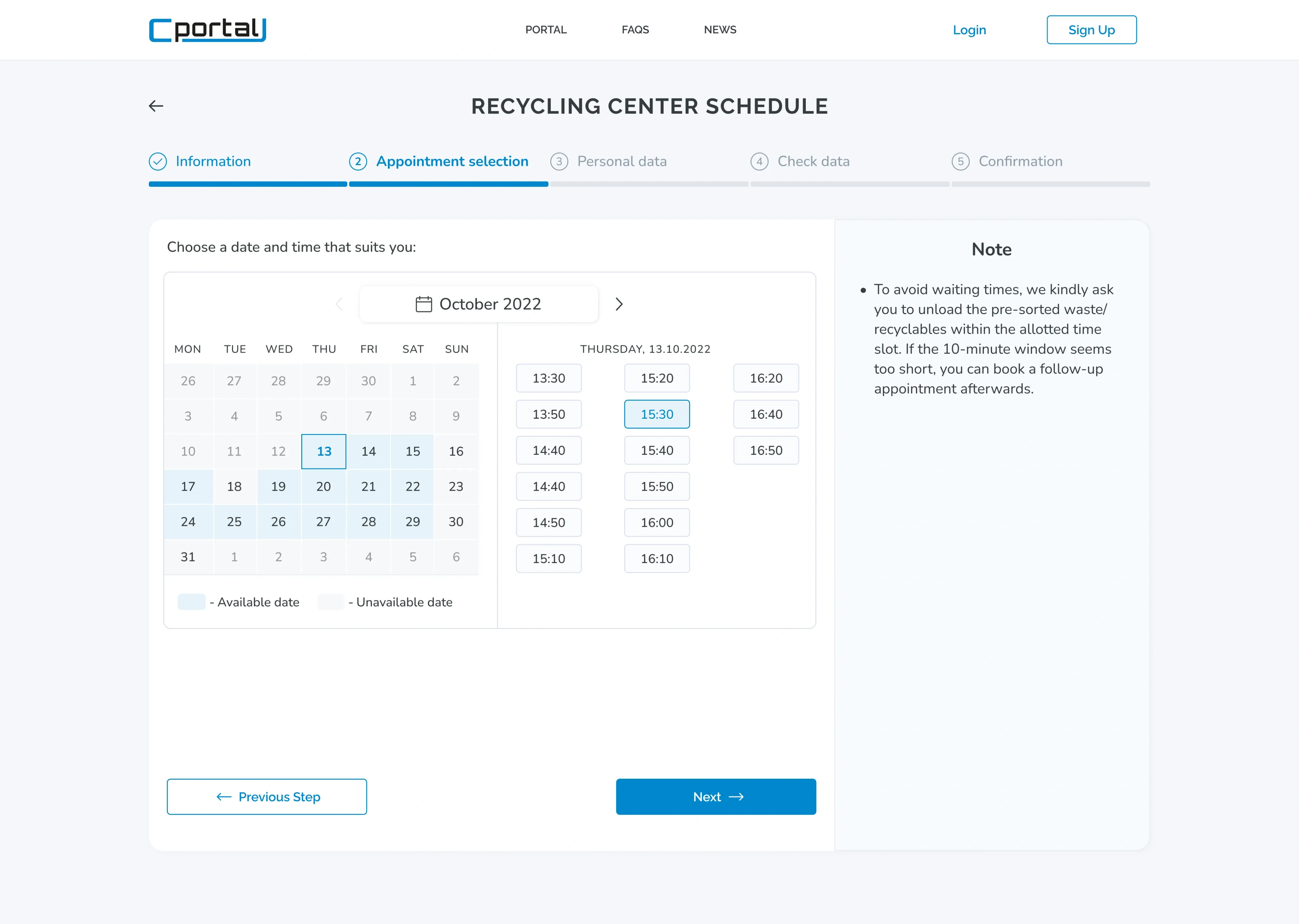
Order, schedule, and monitor all public waste services quickly and conveniently, directly from your device


24/7 Scheduling

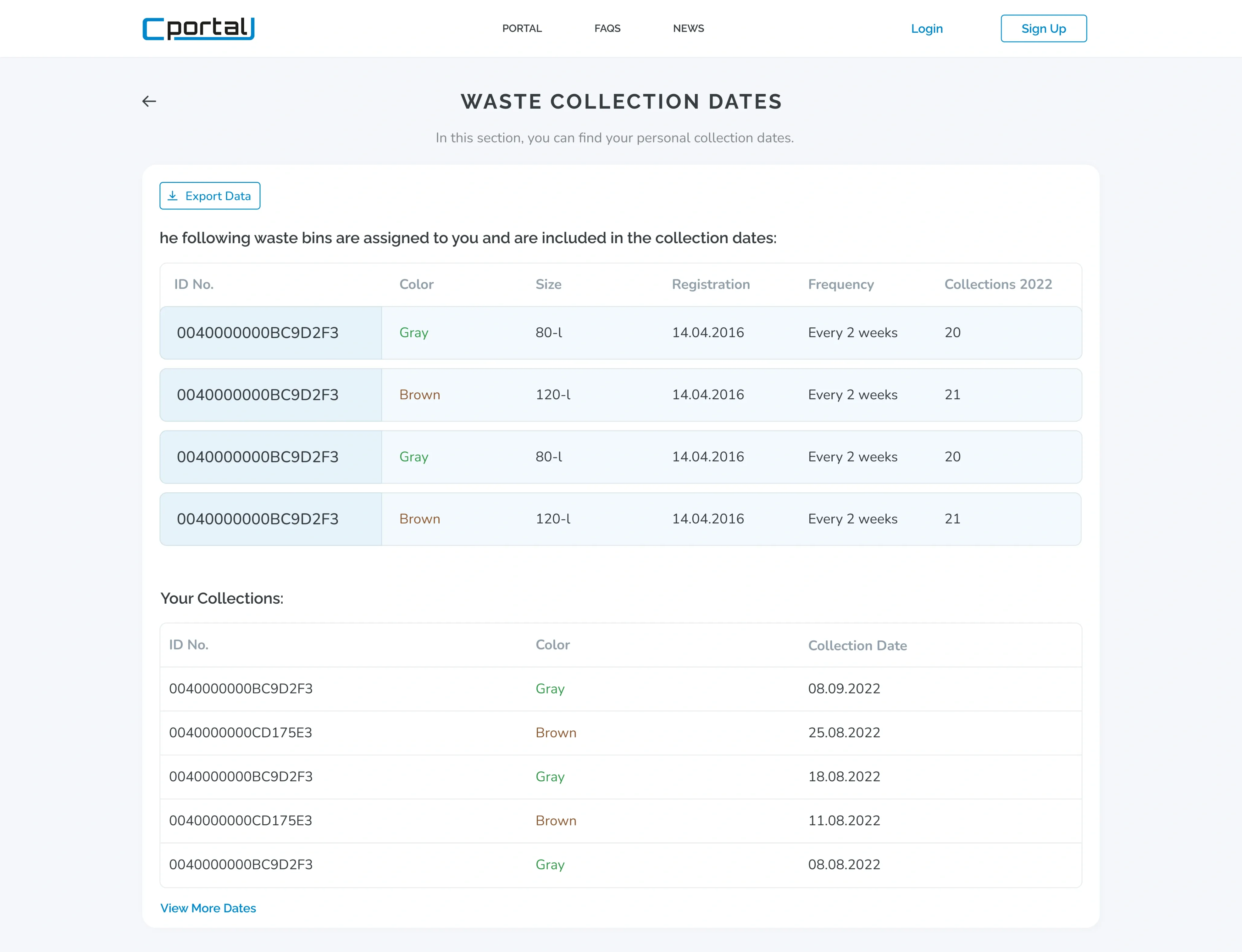
Collection History

Mobile Access

Booking Time Slots


Technology Stack
What C-Portal actually runs on: the citizen front end, the services behind it, and the integrations into the city systems.

Frontend
Stack: React/Next.js
Core Benefit: The responsive portal residents use from desktop, tablet or phone.

Backend
Stack: Node.js
Core Benefit: Every request is priced, routed and tracked instead of arriving as an email.

Database
Stack: PostgreSQL
Core Benefit: Structured requests, booked time slots and collection history a resident can check later.

Deployment
Stack: Docker
Core Benefit: Stable, repeatable deployments of the same containerised API layer.

Integrations
Stack: Municipal logistics and accounting systems
Core Benefit: Each order lands in the systems the city already runs, priced and routed.

Tenancy
Stack: Multi-tenant, role-based access
Core Benefit: A second municipality is configuration, not a second build.
Design & Experience
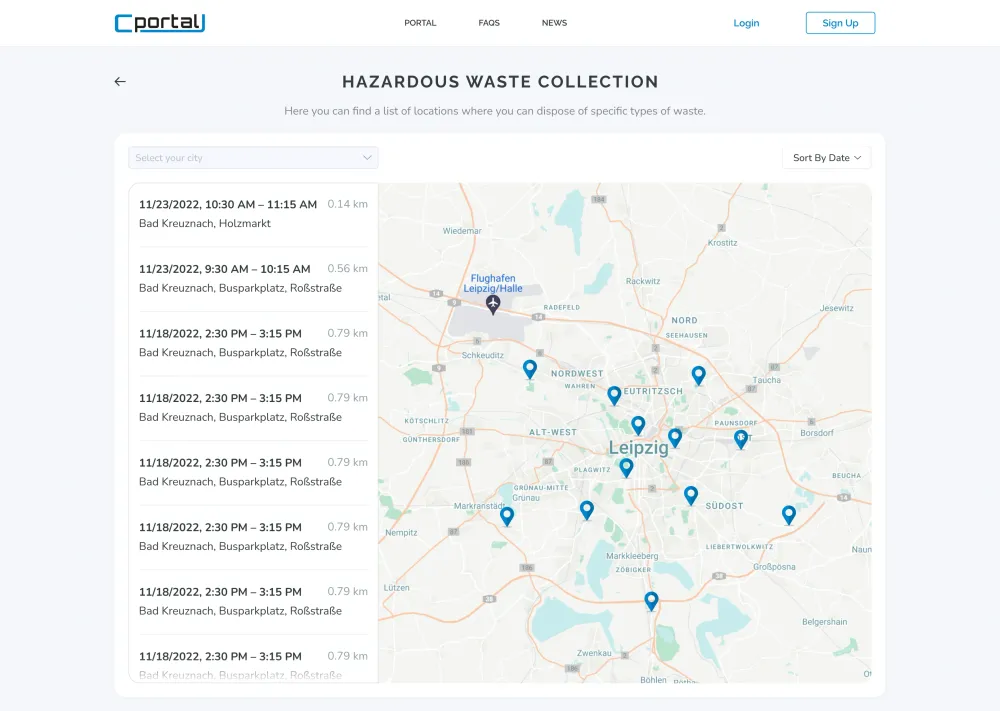
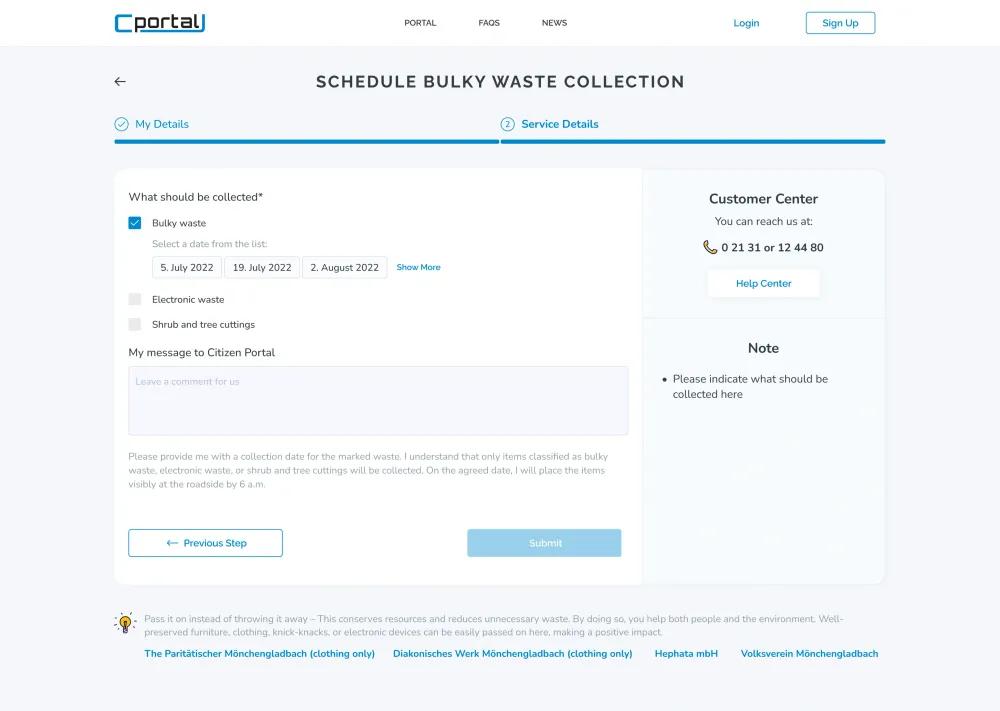
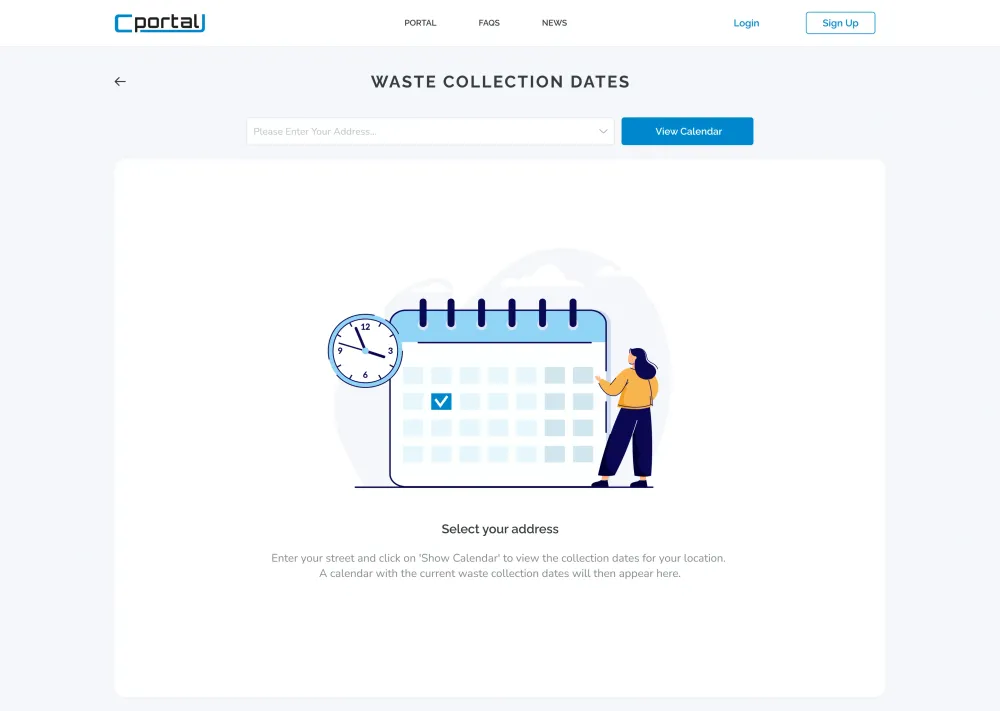
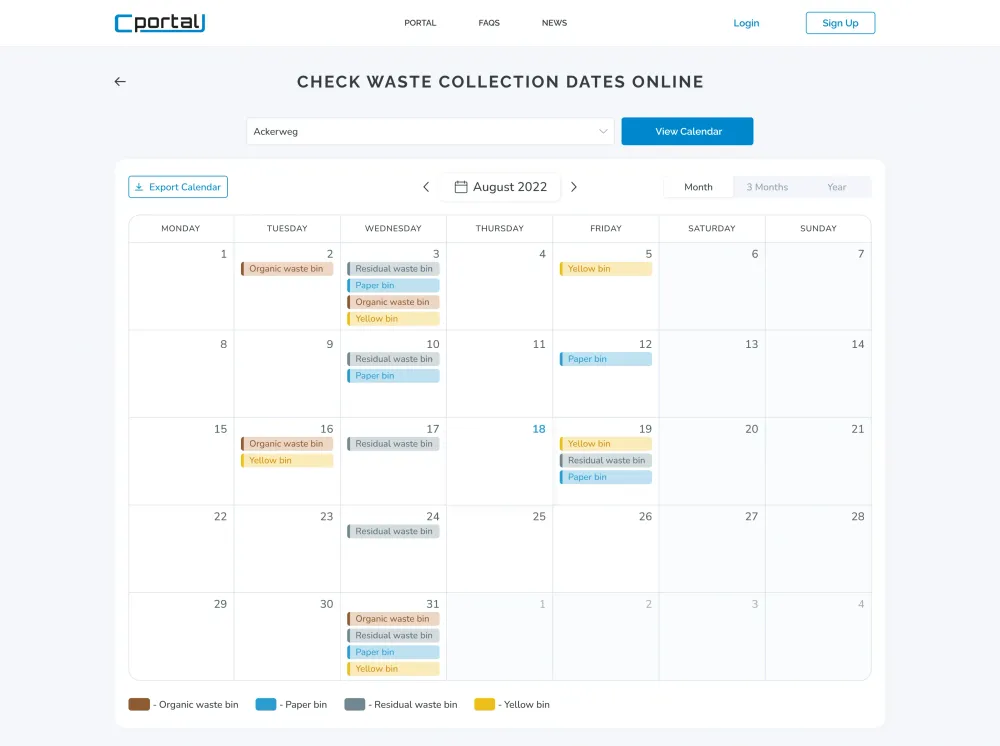
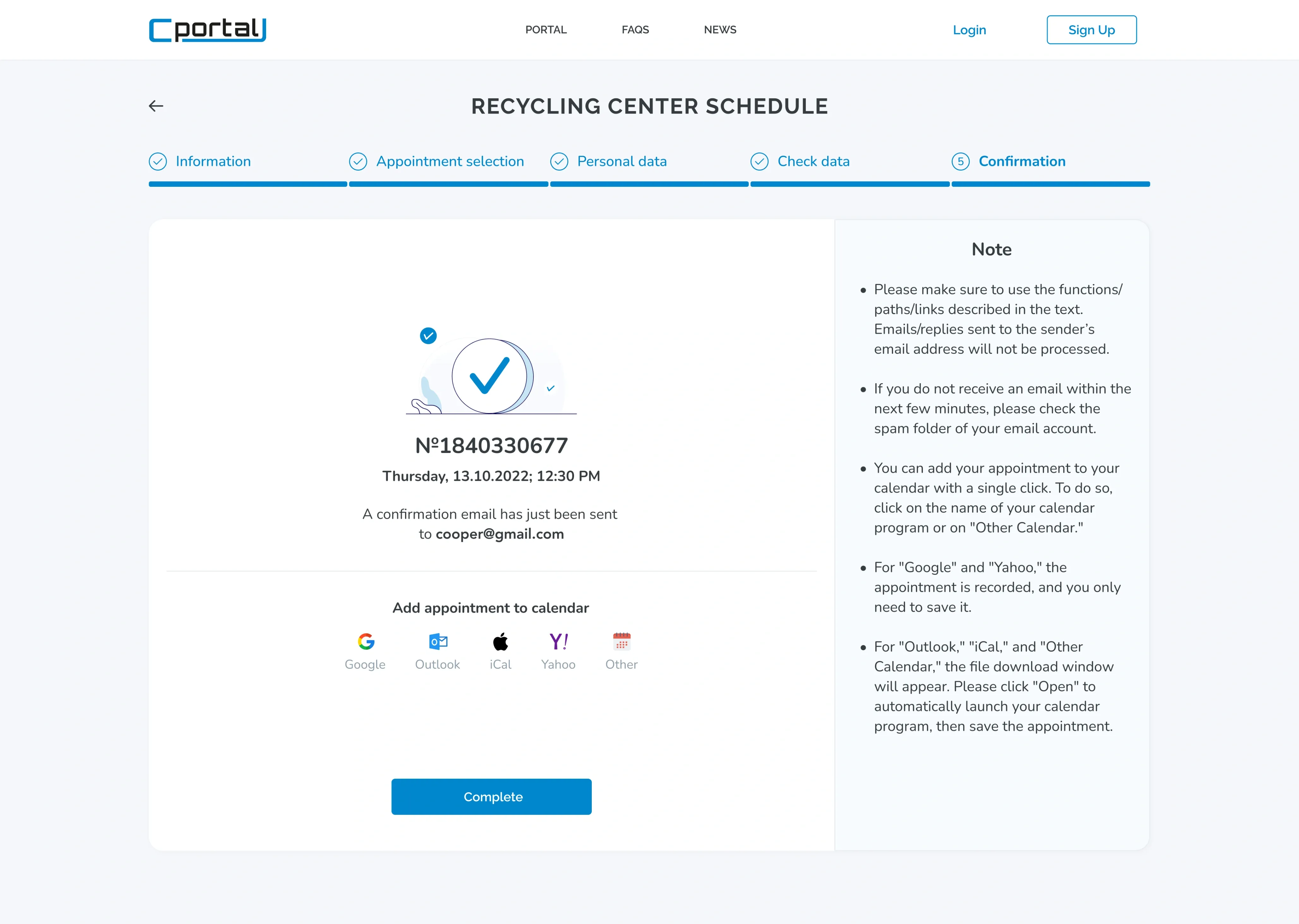
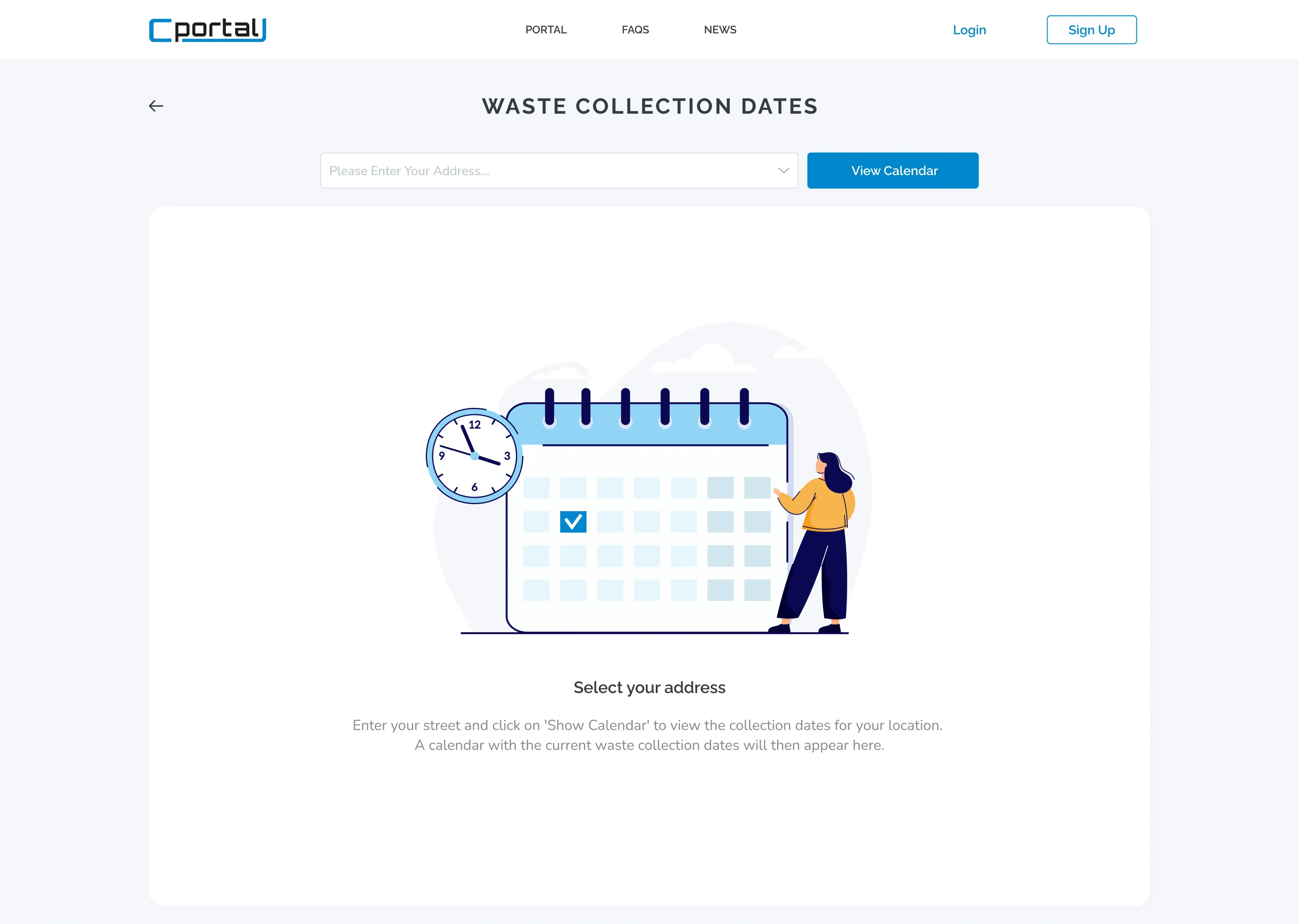
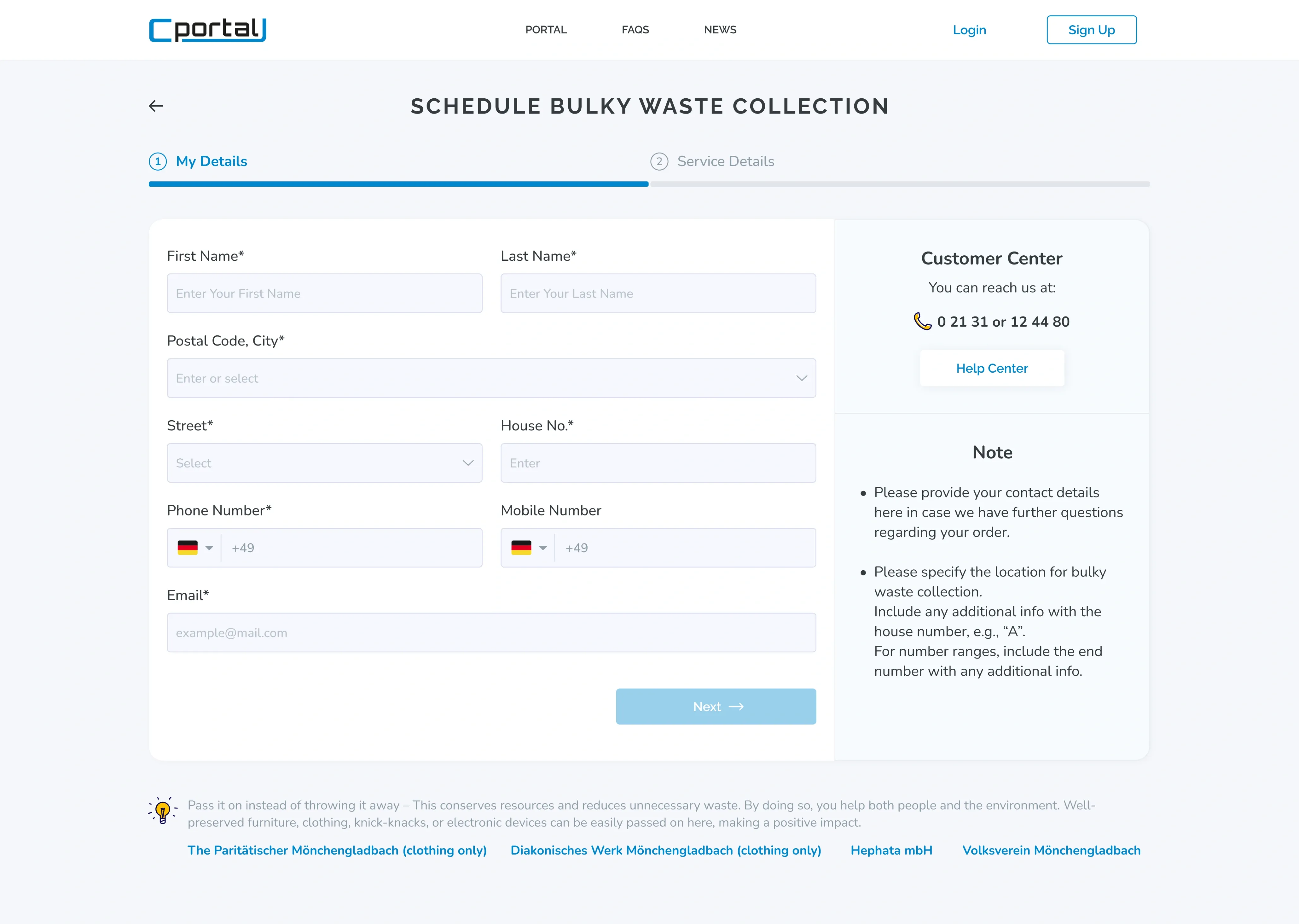
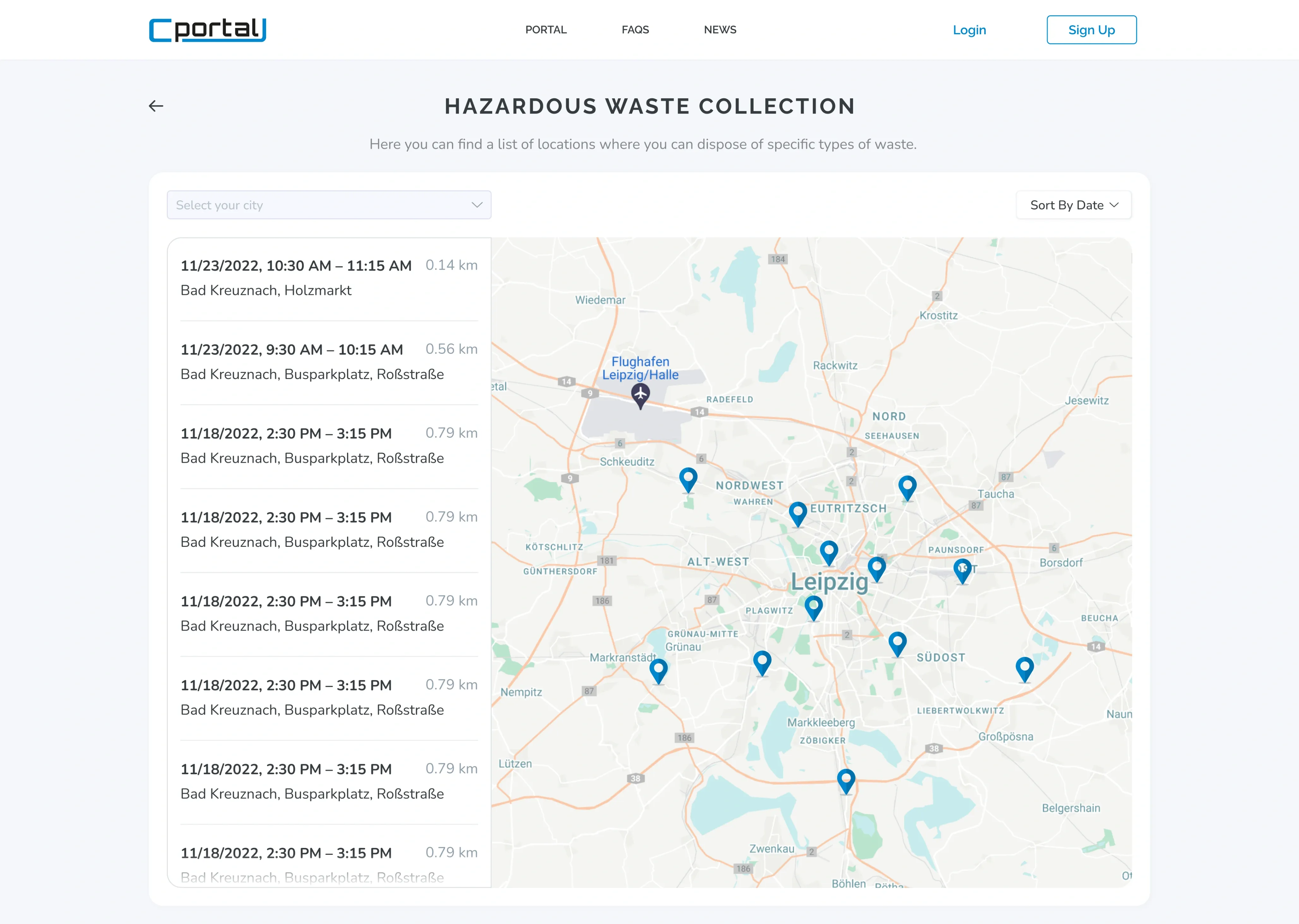
Intuitive design meets high-performance functionality, making municipal services accessible with just a few clicks
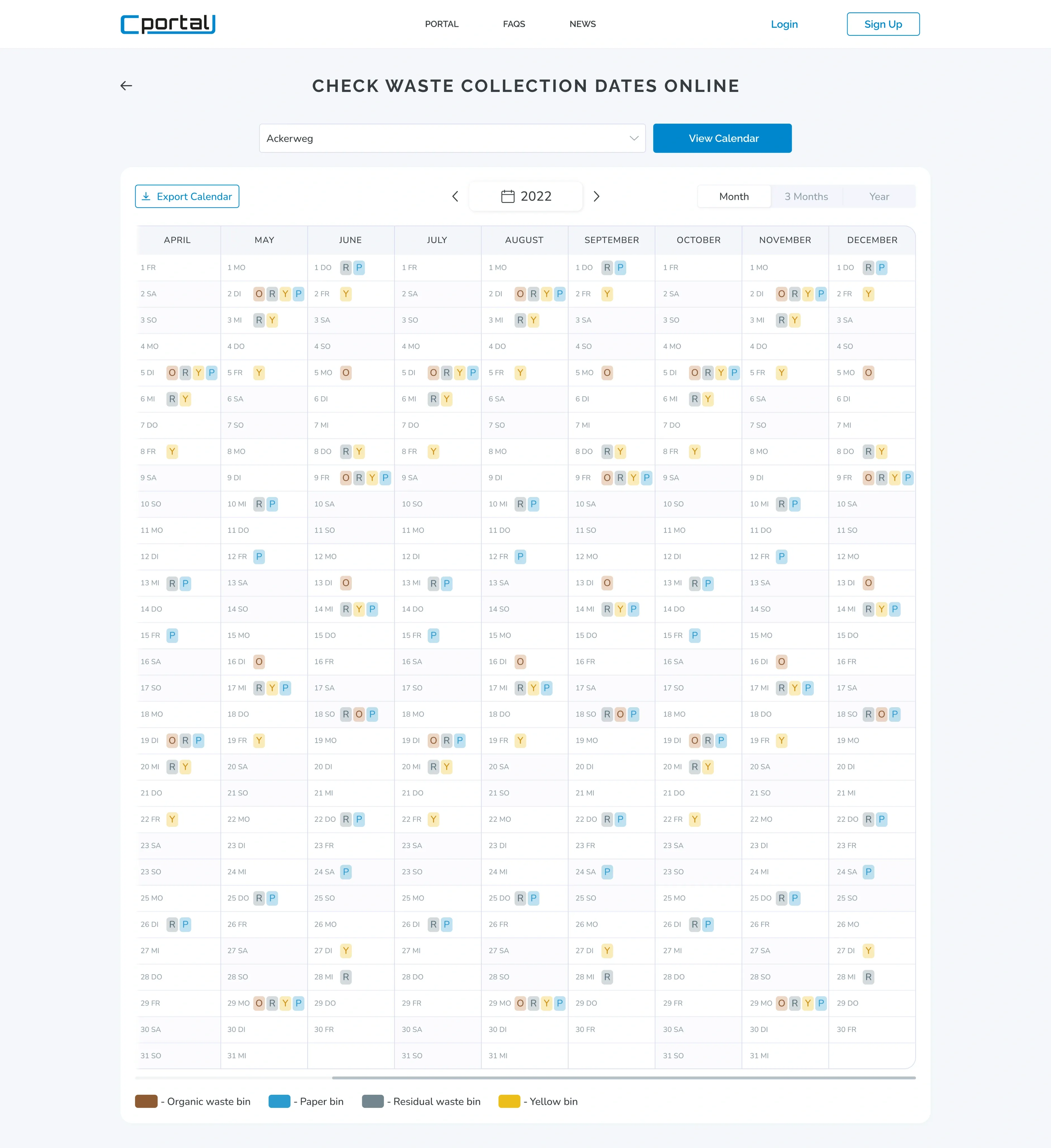
Outcome
C-Portal delivered a fully digital, transparent way for residents to interact with municipal services.
Instead of through multiple phone calls and emails, requests now flow through a single online entry point with consistent forms, status updates and notifications. City operators handle structured data, which speeds up processing and reduces errors.
Residents use the portal from any device to order waste collection, book a time slot and check the history.
- Seamless Accounting Integration
Frontend integrated with Leerungsdaten accounting and logistics system
- Unified UX/UI Design
Establishing a consistent visual style for SENSIS/AWL portals
- Cross-Platform Responsiveness
Correct functionality of calendars and forms on all devices.
Project team

Management
Project leadership, controlling budget and timelines, setting technical direction.
Project ManagerTeam Lead

Development
Build the product by writing code, developing server logic, and creating client-side applications.
AI/Backend DeveloperMobile Developers

Design & Quality
Designing the visual interface and user experience; conducting full quality checks.
UI/UX DesignerQA Engineer
How We Built It
Containers, one API layer and a multi-tenant setup, so a second municipality is configuration and not a rebuild. Price a build like this against your own module list at kultrix.com/cost-calculator.

Modern, Responsive Front End for Citizens (React/Next.js)

Containerized Node.js API Layer for Stable & Repeatable Deployments

Backend Integration with Municipal Logistics & Accounting Systems

Multi-Tenant Setup with Role-Based Access for Easy City Onboarding
With C-Portal, citizens have one place to order services and track updates. Kultrix connected systems behind the scenes, keeping the portal simple - a major step for public services
Markus
Project Lead, CPortal
FAQ
Frequently Asked Questions
C-Portal is a digital service portal that lets residents order municipal services online - anytime, from any device. It covers waste collection, bulky-item requests, container management, schedule changes, and appointment booking.
Residents previously used fragmented channels like phone, email, and separate websites for municipal services, leading to incomplete requests and time-consuming processing for both citizens and staff.
Residents order waste collection, bulky-item pickup and container changes from one portal and book a real time slot, instead of phoning or emailing. Staff receive structured requests routed into the city's logistics and accounting systems. We describe the build here rather than outcomes we cannot source.
24/7 scheduling for service requests, collection history tracking, full mobile access, and time slot booking - all through a single unified interface.
Integrated Node.js services manage logistics, scheduling, and accounting. Every order is tracked, priced, and routed automatically, with seamless accounting system integration.
A React/Next.js front end for residents (how we approach this stack: kultrix.com/services/nextjs-development), Node.js services behind it, PostgreSQL for requests, booked time slots and collection history, and Docker for repeatable deployment. Those services integrate with the city's logistics and accounting systems, and the setup is multi-tenant with role-based access, so a second municipality is configuration rather than a second build.
Yes. The platform was built with a responsive, cross-platform approach so residents can access all services from any device - desktop, tablet, or smartphone.
A single online entry point replacing multiple communication channels, unified UX/UI design across portals, and structured data that significantly improved municipal staff efficiency.
Work of this scope - a web app with accounts and roles, an operator back office with analytics, and the integration into city logistics and accounting systems - is close to the web SaaS scenario of our calculator, 380-810 hours. A third-party integration like this one is 25-70 hours on its own. Those are our ranges for work of that size today, not the figures of this project. Price your own module list at kultrix.com/cost-calculator.
In our calculator a web product with accounts, an admin panel and integrations is 7-15 weeks. A longer module list moves the weeks, and the week count for your own scope comes out of the first call.
From the model behind kultrix.com/cost-calculator, the same one we publish for anyone to run. It is built from the actual hours of our own delivered projects, and module hours are added up for the work that belongs to no single module - the glue between them, the end-to-end testing, the release cycle.
Yes. The setup here is multi-tenant with role-based access, so a second municipality is configuration rather than a second build. Send us the module list you have in mind and we will price it the same way: kultrix.com/contact. Or run the numbers yourself first: kultrix.com/cost-calculator.
Services we used on this project
The same work, described service by service - scope, stack and how we estimate it.
Planning something similar? Discuss a similar project or estimate it with the cost calculator.