OUR SERVICES
SaaS Development Agency - Build & Launch SaaS
Kultrix is a SaaS development agency in Lviv, Ukraine. CPortal, a multi-tenant municipal platform we built on Next.js and Node.js, is one of our published case studies.
OUR SERVICES
Kultrix is a SaaS development agency in Lviv, Ukraine. CPortal, a multi-tenant municipal platform we built on Next.js and Node.js, is one of our published case studies.
start your project
Start with your email, then describe the product and how it should bill, such as subscription plans, usage-based billing or trials. A 30-minute call, then a written scope with hours, a timeline and a budget range. No payment and no commitment at that stage.
Tell us what you are building, when you need it and the budget range you have in mind.
Kultrix builds multi-tenant platforms with Stripe billing, team workspaces, role-based access, and the analytics dashboards founders need to understand their users and grow revenue.
EXPERTISE
OUR APPROACH
Choose the cooperation format that best fits your business goals and development velocity.
Fast launch to test your idea and gather user feedback with minimal investment.
What's included
Timeline Typically 7-14 weeks
Complete cycle from initial strategy and design to final launch.
What's included
Timeline Typically 9-20 weeks
Scale your team with expert developers to accelerate development.
What's included
Timeline Flexible / Long-term
OUR PROCESS
We specialize in creating user-centered & innovative solutions. Delivering seamless digital experiences.
FROM IDEA TO SCALE
The work changes with the stage of the product. We name the stage first, because it decides what to build now and what to leave for later.
One core workflow, accounts and a way to take payment, shipped to real users quickly. A proof of concept is 150-290 hours over 4-6 weeks.
Onboarding, billing, an admin area and analytics, so you can see what users do and support them. A SaaS web product is typically 380-810 hours over 7-15 weeks.
Performance, integrations, roles and permissions, multi-tenant data isolation and monitoring. The architecture from the first version is chosen so this stage is an extension, not a rewrite.
After a 30-minute call with Oleksandr we can say which stage your product is at and which end of the range your case is closer to.
WHAT A SAAS PRODUCT NEEDS
The feature list is the visible part. These are the parts that decide whether the product can take paying customers.
Sign-up and login, teams with roles, and a clear rule for how the data of each customer is kept apart from the others. Authorization is typically 25-50 hours of the plan.
Plans, trials, upgrades, invoices and failed-payment handling. Payments and subscriptions are typically 30-70 hours.
A back office to manage customers, plans and content without a developer. Typically 80-160 hours.
Connections to the tools your customers already use, and exports they can rely on. Typically 25-70 hours per set of integrations.
Access control, audit trail and the checks your market requires. Typically 40-100 hours when compliance is in scope.
These are planning ranges from our own delivery hours, excluding confidential projects, and they are summed for your scope in a written estimate.
SECURITY AND PRIVACY
Customers hand a SaaS product their accounts and their data. These basics are planned from the first version, because adding them later means touching every screen and table.
Every user belongs to a team with a role, and every request is checked against that role on the server, not only hidden in the interface. Authorization is typically 25-50 hours of the plan.
One customer must never see another customer data. We enforce the boundary in the database and the API, and test it with accounts from two different tenants.
Traffic runs over HTTPS, stored data is encrypted at rest by the database and cloud provider, passwords are hashed, and keys and tokens live in environment secrets, never in the code.
Databases are backed up automatically, and we check that a backup can actually be restored. A backup that was never restored is a guess.
A clear privacy policy, consent where it is needed, a list of the services that process user data, and the ability to export or delete one user data on request. Compliance work is typically 40-100 hours when it is in scope.
Sign-ins, role changes and the deletion of important records are logged, so you can answer who did what and when.
We build the technical side of these controls. Legal wording, contracts and any formal certification are for your lawyer and auditor, and we do not claim a certification we do not hold.
LAUNCH CHECKLIST
A typical path from idea to launch takes 7-14 weeks. These are the ten steps we walk through, in the order they usually happen.
Write down who the first customer is and the single job the product does for them. Everything else waits.
Map the shortest path from sign-up to the first useful result, and cut every screen that is not on it.
Prototype sign-up, the core workflow and the billing page, and test them with a few real users before development.
Sign-up, login, teams, roles and tenant isolation, so the data model is right from day one.
Ship the one thing the product does, in short cycles with a demo of the working software at the end of each.
Plans, trial, upgrade, invoices and failed-payment handling, tested with real test cards before any customer pays.
A first-run flow that gets a new user to the first result without a call, with empty states that explain what to do next.
A back office to see customers, plans and errors, and to help a user without asking a developer. Typically 80-160 hours.
Track sign-up, activation and payment, and watch errors and uptime, so you learn from the first users instead of guessing.
Invite the first customers, fix what they hit, then open the doors. A SaaS web product is typically 380-810 hours over 7-15 weeks.
Where your product sits on this list depends on what exists already. After a 30-minute call with Oleksandr we can tell which steps you still need.
FIRST RELEASE
The first release is the smallest version that can take a paying customer. A SaaS web product is typically 380-810 hours over 7-15 weeks, and the scope is written down before development starts.
Sign-up, login, teams and roles, with the rule for how one customer data stays apart from another. This is the base everything else sits on.
The one job the product does for the first customer, built end to end. Secondary features are listed and left for the next release.
Plans, a trial, upgrades, invoices and failed-payment handling, tested with test cards before a real customer pays.
A back office to see customers, plans and errors and to help a user without a developer.
Sign-up, activation and payment tracking, plus error and uptime alerts, so you learn from the first users.
After discovery you get a written scope with hours per module. Anything outside it goes on a separate list and is estimated before it is added, so the plan does not move silently.
Which modules your first release needs, and which end of the range you are closer to, we can tell after a 30-minute call with Oleksandr.
SAAS FOR EUROPE
Selling a SaaS product to customers in the EU adds requirements that are cheaper to plan in the first version than to retrofit. This is the technical side of what we build.
We can host the data of a customer in an EU region and keep it there, with the region stored per tenant, so a customer who asks where their data lives gets a clear answer.
A customer can export their data and request deletion, and the product removes it from the database and from backups on a defined schedule.
We keep a list of the services that process customer data, such as hosting, email and payments. Your lawyer uses that list when drafting the data processing agreement your customers ask for.
Billing that collects the customer country and VAT number, applies VAT rules through a payment provider such as Stripe Tax, and issues invoices with the details EU businesses expect.
Consent banners that actually block analytics until the visitor agrees, and a consent record you can show on request.
Prices shown in euro and local currencies, and an interface ready for more than one language from the start.
We build the technical side. Legal wording, the data processing agreement and tax advice are for your lawyer and accountant, and we do not claim a certification we do not hold.
For the web front end of a SaaS product we often choose Next.js development with server rendering, and the page describes how we scope it.
As the product grows, a shared component library keeps new screens consistent. See our design systems agency page.
When a SaaS product adds AI features such as assistants or document search, read how we handle AI integration into an existing product: LLM APIs, retrieval and review of flagged answers.
EXPERT INSIGHTS
Multi-tenancy maximises infrastructure efficiency while delivering the isolation and customisation enterprise customers demand.
Lower infrastructure cost
Shared resources mean cost scales sub-linearly with customer growth.
Centralised updates
Ship a feature once and every tenant benefits immediately.
Easier monitoring
One deployment surface to instrument, alert, and debug.
Faster onboarding
New tenants provision in seconds - no new infrastructure to spin up.
Maximum data isolation
Customer data physically separated - easier compliance story.
Custom SLAs
Dedicated resources allow guaranteed performance contracts.
Noisy-neighbour-free
One tenant cannot impact another tenant's performance.
On-prem flexibility
Customers can run their own instance behind their firewall.
EXPERT GUIDANCE
Infrastructure Cost
Shared - dramatically lower per-tenant cost at scale.
Data Isolation
Logical isolation - row-level security or schema-per-tenant.
Deployment Cadence
One deploy updates all tenants simultaneously.
Compliance (HIPAA/SOC2)
Achievable - requires careful tenant boundary design.
Customisation
Feature flags and config tables; hard limits on deep divergence.
Best For
SMB/mid-market SaaS with standard feature sets.
Infrastructure Cost
Dedicated per customer - expensive at large customer counts.
Data Isolation
Physical isolation - separate database per customer.
Deployment Cadence
Each tenant may require a separate deploy and test cycle.
Compliance (HIPAA/SOC2)
Simpler narrative - physical separation is easier to audit.
Customisation
Full codebase customisation possible per tenant.
Best For
Enterprise deals requiring dedicated environments.
Feature
Multi-Tenant SaaS
Single-Tenant SaaS
TECH STACK
Front end
Next.js with TypeScript: server rendering for public pages, one codebase for marketing and app.
Back end
Node.js with TypeScript, the same language as the front end, so one team can work across both.
Database
PostgreSQL: relational data, transactions and row-level security for tenant isolation.
Payments
Stripe for plans, trials, invoices and failed-payment retries.
Queues and jobs
Redis-backed queues for emails, imports, reports and webhooks, kept out of the request path.
Hosting
A managed platform with automatic deploys, backups and monitoring, in an account you own.
Front end
The product is a heavy in-browser tool with no public pages, where a plain single-page app is simpler.
Back end
The product is built around heavy data or machine learning work that a Python service handles better.
Database
A part of the data is documents, events or search, and a specialised store serves it better next to Postgres.
Payments
Your market needs local payment methods or a merchant of record that handles tax for you.
Queues and jobs
Volumes grow to the point where you need a managed message broker with guaranteed delivery.
Hosting
Load, cost or a customer requirement calls for your own cloud setup, regions or private networking.
Front end
The front end decides how fast screens load and how easily new ones are added.
Back end
A shared language keeps the team small and code review easy.
Database
Subscriptions, users and invoices are relational, and mistakes there cost money.
Payments
Billing is the part of SaaS that is hardest to change once customers are paying.
Queues and jobs
Slow work in the request path makes the product feel broken.
Hosting
Start simple, and move when a real constraint appears, not before.
Feature
Our default
Change it when
Why it matters
DELIVERABLES

Multi-Tenant Setup
Isolated tenant data architecture with organization and workspace support.

Stripe Billing
Subscription plans, usage-based billing, trials, upgrades, and webhook handling.

Auth & Onboarding
Email/social auth, email verification, and guided onboarding flow.

Admin Dashboard
Internal admin panel for managing users, subscriptions, and platform health.

Feature Flagging
Plan-gated features and gradual rollout system using flags per tenant.

Metrics & Analytics
MRR, churn, DAU/MAU dashboards and event tracking for product decisions.
INDUSTRIES
We build powerful digital experiences across various sectors, ensuring your product meets unique market demands.
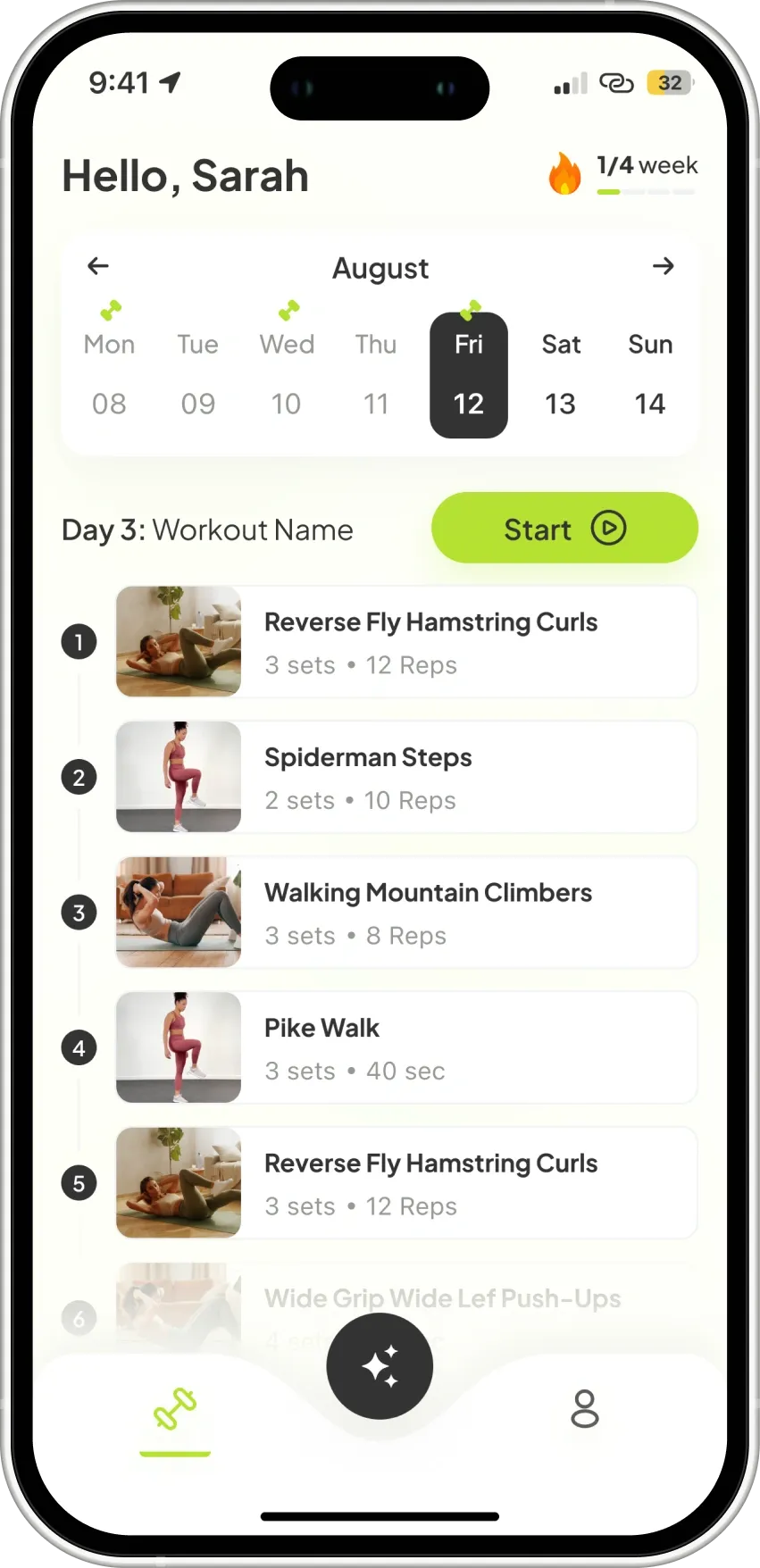
Consumer apps for workouts and training plans, from UI design to the App Store and Google Play. Case study: Fitblast.

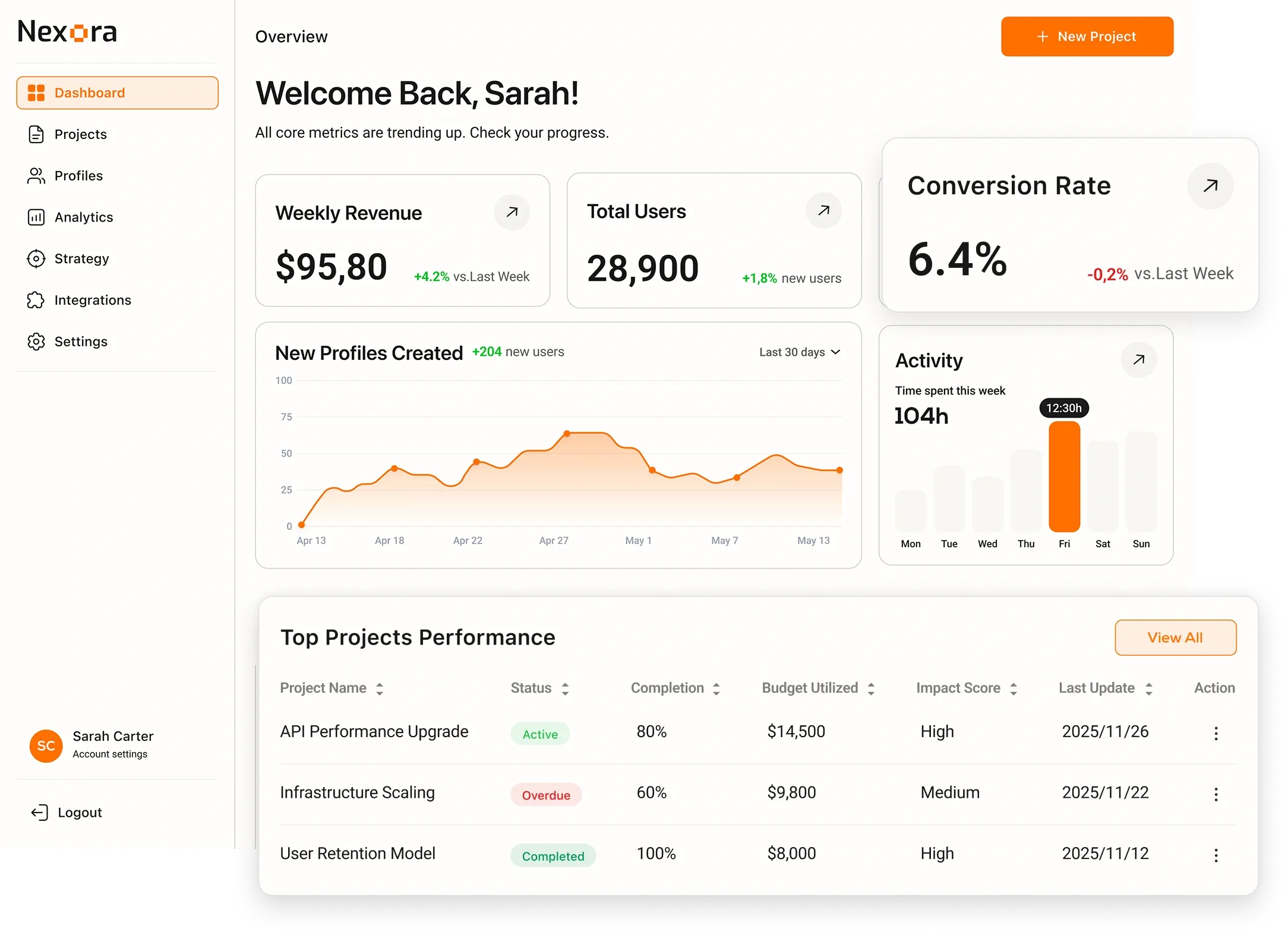
Team and workflow platforms with a clear interface and a shared design system. Case study: Nexora.

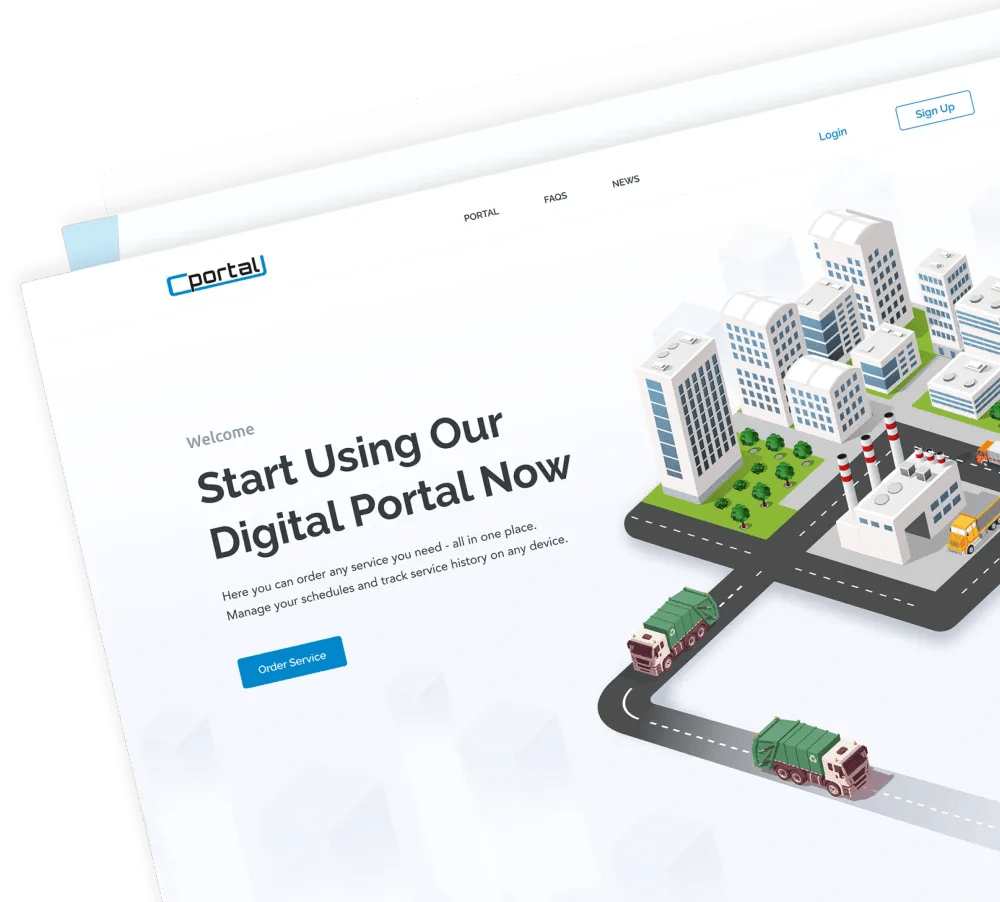
Multi-tenant web portals that serve several organisations from one codebase. Case study: CPortal.

CASE STUDIES
INSIGHTS

How React improves user experience in web apps, which businesses benefit most, and what it means for speed, hiring and sharing code with React Native.
2026-03-31
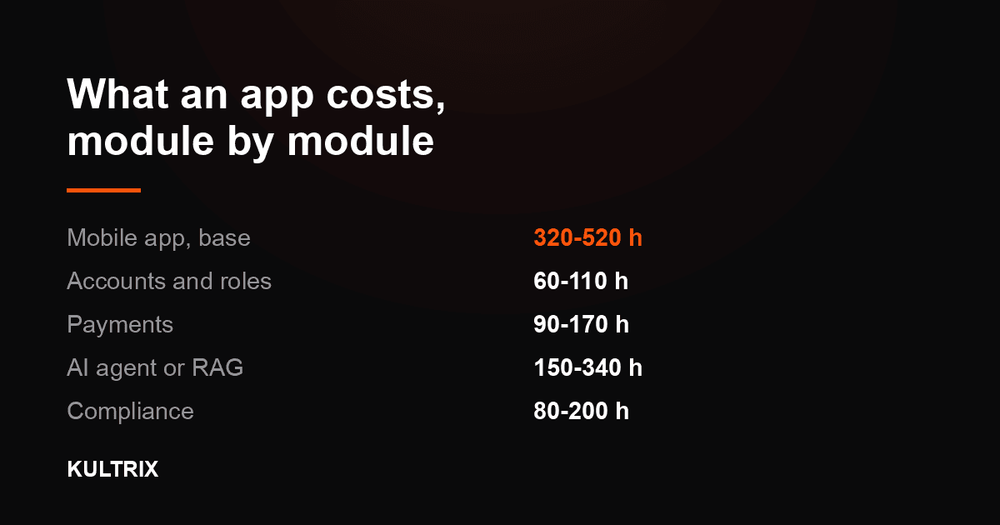
The full estimation model, module by module: base scope, accounts, payments, AI, compliance.
2026-08-23
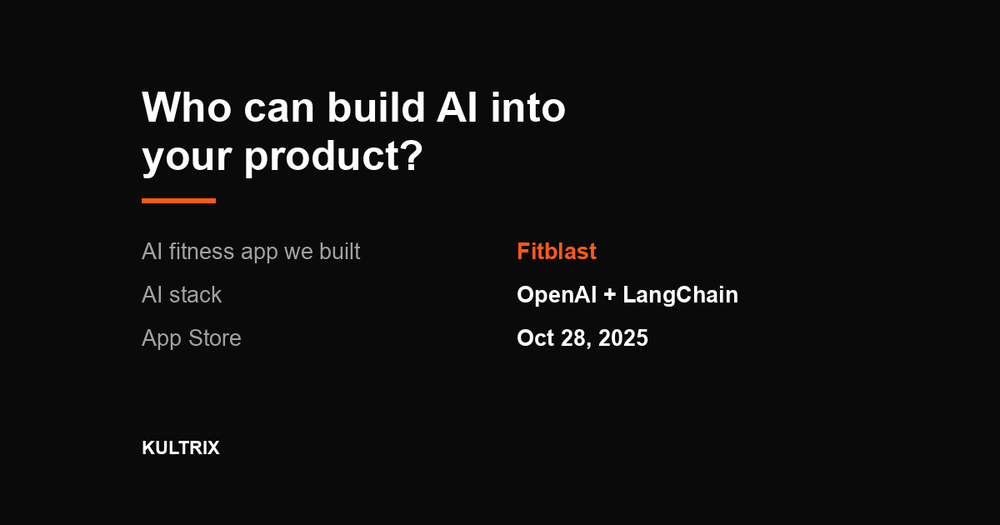
How to pick an AI development partner: who can add an LLM to your product, build document search or a chatbot, or ship an AI first version.
2026-09-29
Same team. Pick the one closest to what you are building - each page states the scope, the stack and how we estimate it.
FAQ
A SaaS web product in our model - accounts, payments, a content layer you control, an admin panel and the third-party systems you already pay for - is 380-810 hours over 7-15 weeks. A full build with every module switched on across web and mobile is 960-2,110 hours over 9-20 weeks. Both figures come from the same model as kultrix.com/cost-calculator, so you can reproduce them module by module. Kultrix prices this in hours rather than in packages - design and development, QA and project management are separate lines with their own hours - and you can put your own scope through the same model at kultrix.com/cost-calculator.
We share frameworks and data from similar SaaS products we have built - per-seat vs usage-based vs flat-rate trade-offs, free trial vs freemium conversion rates, and plan tier structuring. While pricing strategy is ultimately your decision, we bring context from real SaaS outcomes. Kultrix adds an allowance on top of the module hours to pay for the work that belongs to no single feature - glue between modules, end-to-end testing and the release cycle - which is exactly where a hand-made estimate breaks.
A SaaS web product with auth, billing, the primary feature set and a basic admin is 380-810 hours over 7-15 weeks. A polished v1 with a marketing site, onboarding flow and analytics adds modules and hours, which you can price one by one at kultrix.com/cost-calculator. Kultrix works iteratively so you see working software as it is built. Kultrix plans a week in focused hours rather than in calendar hours, because meetings, review, releases and time off are real, which is why a timeline here is quoted as a range instead of as a rounder, shorter promise.
Yes. Kultrix performs SaaS architecture audits and implements scaling solutions - read replicas, Redis caching, background job queues, and CDN offloading - before performance becomes a customer problem. Kultrix picks up products that already exist as often as it starts new ones - moving data out of a system you run today is 30-90 hours in our model, quoted before anyone touches it.
We implement row-level multi-tenancy by default - all database tables include an organization_id column, and every query is scoped to the authenticated tenant. For strict isolation requirements, we also support schema-per-tenant or database-per-tenant architectures. Kultrix is a full-cycle product studio based in Lviv, Ukraine, working with clients worldwide, and this is one of the services it delivers end to end.
We implement Stripe Checkout and Customer Portal for subscriptions, handle billing webhooks for subscription lifecycle events (created, updated, cancelled, payment failed), sync subscription state to your database, and gate features based on plan limits. Kultrix quotes work like this as its own line instead of folding it into someone else's number: third-party integrations are 25-70 hours in our model.
We enforce tenant isolation at the query level, implement rate limiting per user and organization, use short-lived JWTs with refresh token rotation, store secrets in environment variables (never in code), and run OWASP-based security reviews before launch. Kultrix quotes this as its own module rather than as goodwill - 30-70 hours for WCAG work and 40-100 hours for GDPR, PCI or HIPAA - because review cycles are real time and burying them is how dates slip.
We implement a centralized feature-flag system that checks the authenticated user's subscription plan before allowing access to premium features. This makes adding new plan tiers or moving features between plans a configuration change rather than a code change. Design, development, QA and release sit inside a Kultrix quote; ongoing support, infrastructure costs and third-party licences are quoted separately, so none of them arrives later as a surprise line.
We use cookies to analyze traffic. Privacy Policy