OUR SERVICES
React Native: One Codebase, Two Platforms
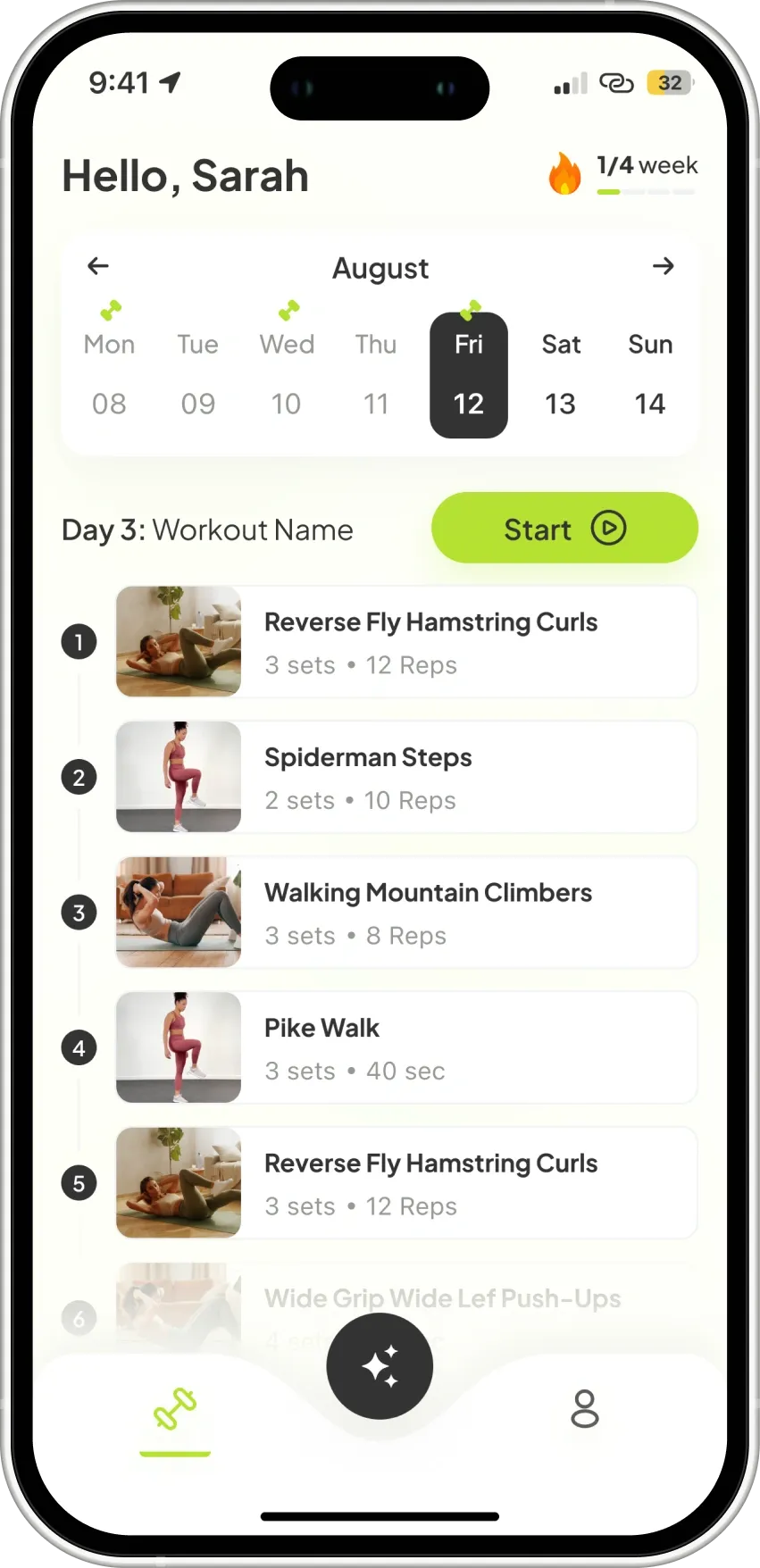
Kultrix is a React Native development company in Lviv, Ukraine. Fitblast, our React Native and Expo app, is live on the App Store and Google Play from one codebase.
OUR SERVICES
Kultrix is a React Native development company in Lviv, Ukraine. Fitblast, our React Native and Expo app, is live on the App Store and Google Play from one codebase.
start your project
Start with your email, then describe the app and any device features it needs, such as camera, biometrics or Bluetooth. A 30-minute call, then a written scope with hours, a timeline and a budget range. No payment and no commitment at that stage.
Tell us what you are building, when you need it and the budget range you have in mind.
Our team leverages Expo, TypeScript, and battle-tested architecture patterns to ship fast, reliable apps that feel truly native, not like a web wrapper.
EXPERTISE
OUR APPROACH
Choose the cooperation format that best fits your business goals and development velocity.
Fast launch to test your idea and gather user feedback with minimal investment.
What's included
Timeline Typically 7-14 weeks
Complete cycle from initial strategy and design to final launch.
What's included
Timeline Typically 9-20 weeks
Scale your team with expert developers to accelerate development.
What's included
Timeline Flexible / Long-term
OUR PROCESS
We specialize in creating user-centered & innovative solutions. Delivering seamless digital experiences.
TAKEOVER
Many teams come to us with a React Native app that works in the simulator and breaks in production: a release build that crashes on launch, an EAS build that fails only on CI, or a codebase nobody on the current team fully understands. We start with an audit, not a rewrite.
Hermes, minification and native module linking behave differently in release builds; most “works on my machine” crashes live here.
Expo EAS profiles (development, preview, production), environment variables and secrets, signing credentials for iOS and Android, and a CI run that reproduces the store build.
Libraries with native code (chat, payments, maps, push) that lag behind the current React Native version or the New Architecture.
A staged move to a supported React Native and Expo SDK version, with a smoke-test checklist per step.
Written notes on structure, build commands and known risks, so another team can pick the project up.
You get the findings in writing before we change anything, and the fixes are scoped from them.
RESULTS
A React Native app with one codebase for iOS and Android.
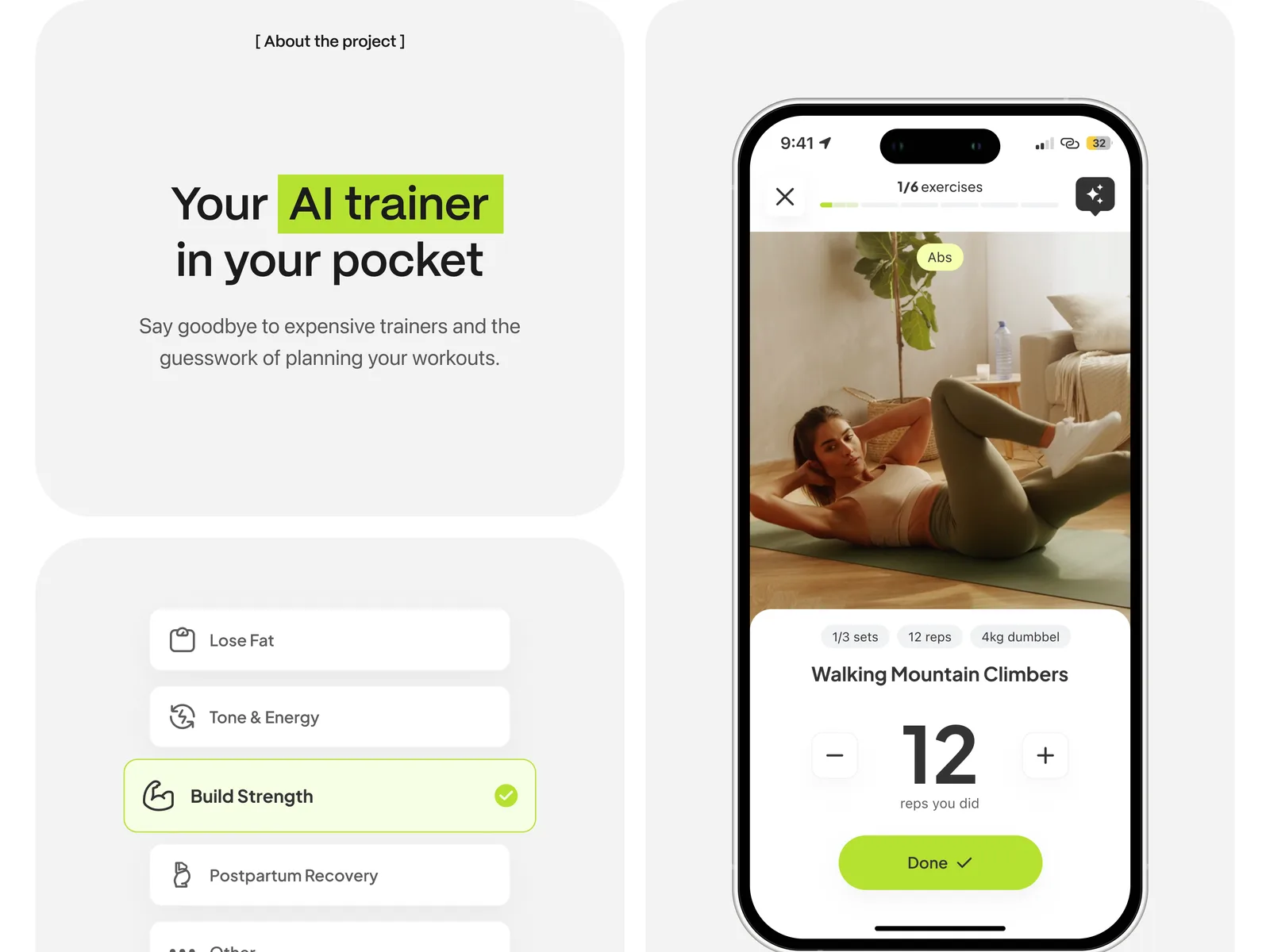
React Native and Expo on the front end, Python (FastAPI) and PostgreSQL on the back end. On the App Store since October 28, 2025, and on Google Play.
On the App Store since October 28, 2025, and also live on Google Play: the MVP shipped in both stores.
React Native and Expo on the front end, Python (FastAPI) and PostgreSQL on the back end, OpenAI API with LangChain for plan generation, and vector search for exercise matching.
Design, development and QA from one team: a project manager, a team lead, mobile and AI/backend developers, a UI/UX designer and a QA engineer.
“The Kultrix team brought our idea to life faster and better than imagined. They built a living product that understands and motivates people. The AI logic feels like real coaching magic!” - Laurent D., CEO of Fitblast
SUPPORT
A React Native app does not stop at the store release. React Native, Expo SDK and the iOS and Android toolchains move on, and an app left alone falls behind. We stay on after launch with a clear maintenance routine.
Staged moves to a supported version, one step at a time, with a smoke-test checklist per step so a release never depends on one big jump.
Crash reporting wired to both stores’ builds, so a failing release shows up in a report before it shows up in reviews.
Regular updates of libraries with native code (push, payments, maps, chat) and security fixes, checked against the current React Native version.
An agreed response window and scope for fixes and small changes after launch, written down before the work starts.
If the app was built by another team, we begin with the audit described above and take over the upgrade path from there.
APP TYPES
Four kinds of React Native apps we scope most often, and what decides the work in each.
The app keeps working without a connection: local storage, a sync queue and a rule for resolving conflicts when the device reconnects. Offline mode is scoped as its own module, typically 40-90 hours.
Cart, checkout and payouts through a payment provider, with server-side validation of every transaction.
The app calls an AI backend instead of running models on the phone. In Fitblast, a Python (FastAPI) service uses the OpenAI API with LangChain to build workout plans, and the React Native app shows them.
We connect the app to your existing REST API or a new Python or Node.js backend, and agree the contract before screens are built.
Fitblast is the project behind the AI example above; the other types are described as our approach, not as published cases.
CHOOSING A COMPANY
Kultrix is a React Native development company in Lviv, Ukraine, working with founders and product teams in the US and Europe. When you compare React Native companies, these five checks separate them.
Ask how the app is built and signed for the stores. We use Expo and EAS profiles for development, preview and production, and a CI run that reproduces the store build.
The source code should live in your repository, not behind the agency. Ask for access from the first week and a written handover of structure, build commands and known risks.
React Native and the Expo SDK move on every few months. Ask who does the upgrades and crash monitoring, and on what terms. Ours are agreed in writing before the work starts.
Design, development and QA from one team, led by a project manager, as on Fitblast: mobile and backend developers, a UI/UX designer and a QA engineer.
Ask for live apps and a client voice. Fitblast is in the App Store and on Google Play, and its founder says on the page what working with us was like.
Give two or three companies the same one-page brief; the differences show in the questions they ask back.
AGENCY, FREELANCER OR IN-HOUSE
Three ways to get a React Native app built, and what each is good for.
Design, development, QA and project management in one team, so one person leaving does not stop the project. Fits a product that needs to go from idea to both stores. Costs more process than a single freelancer.
One person, a fast start, good for a small and well-defined scope. The risk is a single point of failure: no second developer, no QA or designer, and the project depends on one calendar.
Full control and long-term product knowledge. It takes time to hire, needs steady work for the people you hire, and needs someone who has shipped React Native to the stores before.
An agency can ship the first version and hand the code to your own team later; written handover notes make that possible.
FROM UKRAINE
We work from Lviv, Ukraine, with clients in the US and Europe. Instead of a price list on a page, you get a written scope you can check line by line.
You describe the app and the device features it needs, such as camera, biometrics or Bluetooth. No payment and no commitment at that stage.
The estimate comes back as hours per module, a timeline and a budget range, built from tracked hours on past projects. You can change the module list and see how the hours move.
A mobile MVP with accounts, payments, content and an admin panel is 370-750 hours over 7-14 weeks. Put your own modules through kultrix.com/cost-calculator.
We agree the working-hours overlap with you before the start and send a written weekly update.
The calculator shows hours and weeks; the budget range comes with the written scope after the call.
Chat, summaries and semantic search in a React Native app are built through AI integration services that connect the model to your API.
For one UI across iOS and Android, a design systems agency can prepare the component library and tokens first.
EXPERT INSIGHTS
React Native lets JavaScript teams ship production-quality iOS and Android apps from a single codebase - without sacrificing native feel.
JavaScript / TypeScript stack
Leverage your existing web engineers - no Dart or Swift required to get started.
True native components
UI maps to actual platform views, so scroll physics and gestures feel genuinely native.
New Architecture (JSI)
The JSI bridge eliminates the old async bottleneck, delivering near-native rendering and 60 fps animations.
Expo ecosystem
Expo SDK, EAS Build, and OTA updates drastically cut CI/CD and release overhead.
Pixel-identical rendering
Flutter's Skia/Impeller engine draws every pixel itself - great for fully custom UIs.
Compiled to native ARM
Dart AOT compilation avoids a JS runtime layer.
Strong Google backing
First-class support for Google products and Material 3.
Single widget tree
Consistent UI across iOS, Android, web, and desktop from one widget system.
EXPERT GUIDANCE
Language
TypeScript - shares skills with your web team.
UI Fidelity
Renders native platform components for authentic feel.
Ecosystem
Massive npm/Expo ecosystem with mature third-party libs.
Performance
Excellent with JSI; complex animations need Reanimated 3.
OTA Updates
Expo EAS Update ships JS changes without store review.
Best For
Teams with JS expertise, rapid MVPs, content-driven apps.
Language
Dart - smaller talent pool, steeper onboarding.
UI Fidelity
Custom renderer - pixel-perfect but may feel slightly off-platform.
Ecosystem
Growing pub.dev; fewer battle-tested packages for edge cases.
Performance
Slightly faster cold starts; Impeller delivers smooth 120 fps.
OTA Updates
No OTA for compiled Dart code; store release required.
Best For
Apps with fully custom graphics, teams starting from scratch.
Feature
React Native
Flutter
DELIVERABLES

Cross-Platform App
Single TypeScript codebase targeting iOS and Android with shared business logic and platform-specific UI polish.

Native Module Bridge
Custom native modules for device APIs - camera, biometrics, Bluetooth - unavailable in the JS thread.

State Architecture
Scalable Redux Toolkit or Zustand setup with typed slices, middleware, and persistence.

Automated Test Suite
Jest unit tests and Detox end-to-end flows covering critical user paths on both platforms.

Store Submission
Complete App Store and Google Play submission including screenshots, metadata, and compliance review.

OTA Update Pipeline
EAS Update setup for over-the-air JS bundle updates without app store re-review.
INDUSTRIES
We build powerful digital experiences across various sectors, ensuring your product meets unique market demands.
Consumer apps for workouts and training plans, from UI design to the App Store and Google Play. Case study: Fitblast.

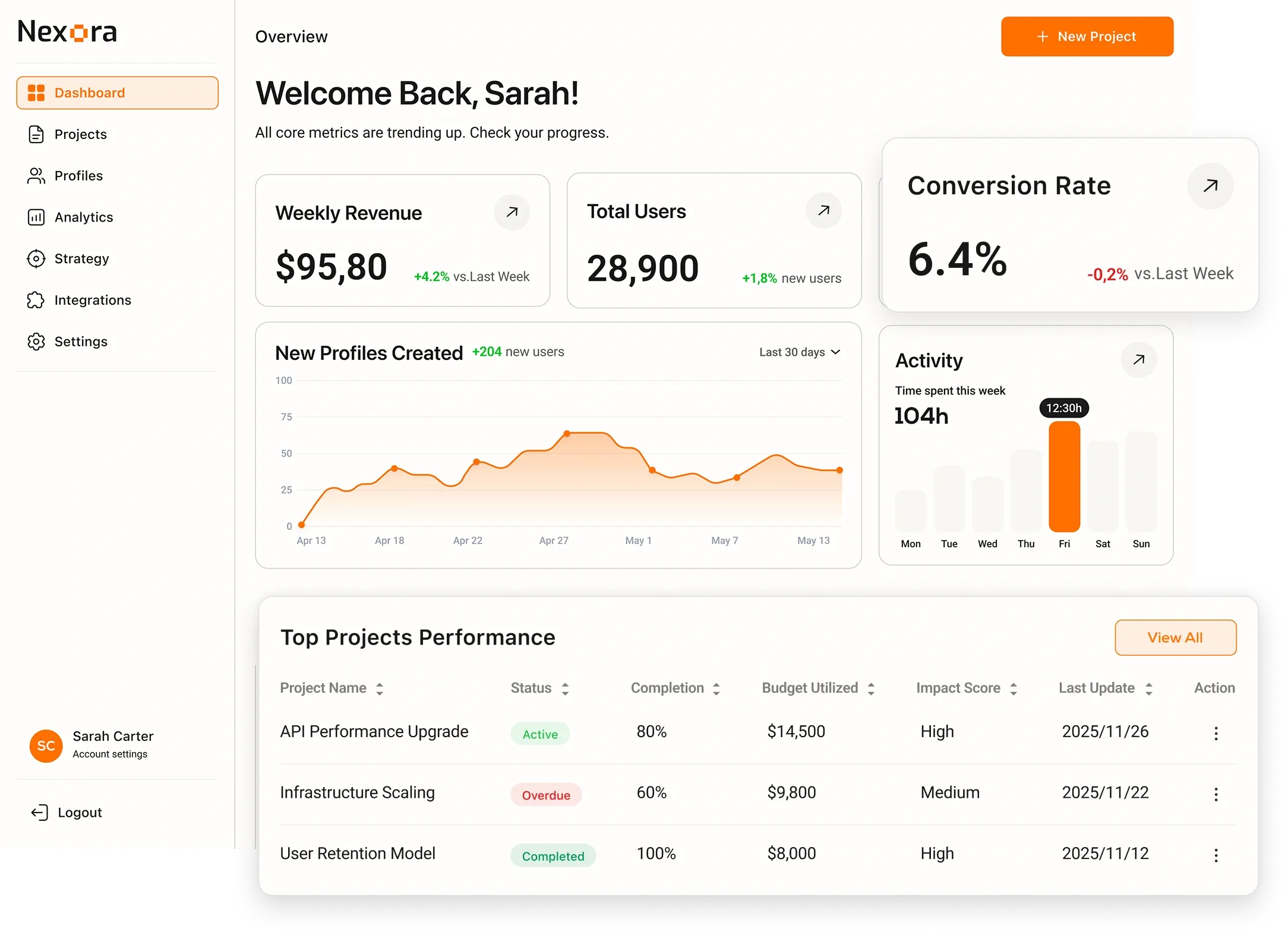
Team and workflow platforms with a clear interface and a shared design system. Case study: Nexora.

Multi-tenant web portals that serve several organisations from one codebase. Case study: CPortal.

CASE STUDIES
INSIGHTS
Seven checks to run before you sign with a React Native team: proof, architecture, scope in hours, release ownership and what happens after launch.
2026-10-16

React Native in 2026: the new architecture without the bridge, AI-assisted code, web and desktop targets, on-device AI and compliance, with hours for each.
2026-04-16

Hiring React Native developers in 2026? Compare a freelancer, an agency team and a full-time hire: skills to test, red flags, time to start and delivery risk.
2026-03-27
Same team. Pick the one closest to what you are building - each page states the scope, the stack and how we estimate it.
FAQ
A mobile MVP with accounts, payments, content and an admin panel is 370-750 hours over 7-14 weeks, and the mobile base under it is 120-220 hours. Hours move with feature depth, the number of integrations and whether design is included - each integration with someone else's system is 25-70 hours. Reproduce it at kultrix.com/cost-calculator. Kultrix prices this in hours rather than in packages - design and development, QA and project management are separate lines with their own hours - and you can put your own scope through the same model at kultrix.com/cost-calculator.
A mobile MVP with accounts, payments, content and an admin panel takes 7-14 weeks and 370-750 hours, and that is the same figure whether the client is React Native or native iOS. A proof of concept is 150-290 hours over 4-6 weeks. Kultrix gives a detailed timeline after the discovery sprint, when the module list is fixed. Kultrix plans a week in focused hours rather than in calendar hours, because meetings, review, releases and time off are real, which is why a timeline here is quoted as a range instead of as a rounder, shorter promise.
Yes. We regularly perform codebase audits on inherited projects, identify architectural debt, upgrade dependencies (including major Expo SDK versions), and take over ongoing development. We provide a written audit report before committing to the engagement. Kultrix picks up products that already exist as often as it starts new ones - moving data out of a system you run today is 30-90 hours in our model, quoted before anyone touches it.
For most startups we recommend React Native, because it shares the JavaScript and TypeScript ecosystem with a web team on React or Next.js, which makes hiring easier and lets you reuse code and people. Flutter is a reasonable choice for a team already invested in Dart. The comparison section above covers the trade-offs in detail. Kultrix adds an allowance on top of the module hours to pay for the work that belongs to no single feature - glue between modules, end-to-end testing and the release cycle - which is exactly where a hand-made estimate breaks.
We default to Expo Managed or Bare Workflow because it dramatically speeds up setup and gives access to EAS Build and EAS Update. We eject to bare React Native when a third-party SDK requires Gradle or Podfile customization that Expo cannot accommodate. The choice is driven by your requirements, not preference. Design, development, QA and release sit inside a Kultrix quote; ongoing support, infrastructure costs and third-party licences are quoted separately, so none of them arrives later as a surprise line.
Kultrix, a full-cycle product studio in Lviv, Ukraine, designs and builds React Native apps for startups and businesses worldwide, with iOS and Android shipped from one codebase. Our proof is Fitblast, an AI fitness app: one React Native codebase for both the iOS and Android apps, on the App Store since October 28, 2025 and also live on Google Play, built by one team covering design, development and QA. The case study is at kultrix.com/works/fitblast. Before a single module is added, Kultrix starts a mobile build at 120-220 hours and a web build at 100-200 hours; every module on top of that is listed with its own hours at kultrix.com/cost-calculator.
Yes. React Native renders genuine platform UI components, so buttons, navigation gestures, and scrolling behavior follow each platform's conventions. We add platform-specific styling where needed - for example, iOS-style navigation headers vs. Android Material patterns - so users on each platform feel at home. If this has to work on mobile and on web, Kultrix starts a two-client build on a shared backend at 200-360 hours before any module is added.
For the vast majority of apps - ecommerce, fintech, social, productivity - React Native performance is indistinguishable from native. The new Architecture (Fabric + JSI) eliminates the asynchronous bridge bottleneck. For apps with heavy 3D rendering or extreme animation complexity, we integrate native modules or recommend a native approach. Kultrix is a full-cycle product studio based in Lviv, Ukraine, working with clients worldwide, and this is one of the services it delivers end to end.
We use cookies to analyze traffic. Privacy Policy